Great saphenous vein
The Great Saphenous Vein (GSV) is the largest vein in the human body, and is also known as the long saphenous vein. It is a superficial vein, meaning it is close to the surface of the body, and it runs along the length of the lower limb, returning blood from the foot, leg and thigh to the deep femoral vein at the femoral triangle.
Anatomy[edit]
The GSV originates from where the dorsal vein of the first digit (big toe) merges with the dorsal venous arch of the foot. After this junction, it runs up in front of the medial malleolus (part of the tibia bone) and along the medial side of the leg. At the knee, it runs over the posterior border of the medial epicondyle of the femur bone. The vein then courses up the medial side of the thigh to ultimately join with the femoral vein.
Clinical Significance[edit]
The Great Saphenous Vein is often used in coronary artery bypass surgery. The vein is harvested from the leg and used to bypass blocked coronary arteries. This is possible because veins can handle the lower pressure environment found in veins as compared to arteries.
In addition, the GSV can become varicose, a condition known as varicose veins. This is when the vein becomes enlarged and overfilled with blood, causing it to appear raised and swollen. Varicose veins can cause aching pain and discomfort, and in some cases, can lead to more serious problems.
See Also[edit]
References[edit]

This WikiMD article can only be edited by registered and verified editors. You can log in or register.
-
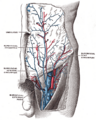 Anatomical illustration of the great saphenous vein
 -
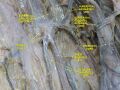 Great saphenous vein in a clinical slide
 -
Great saphenous vein in a different clinical slide
-
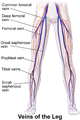 Diagram showing leg veins including the great saphenous vein


Medical Disclaimer: WikiMD is for informational purposes only and is not a substitute for professional medical advice. Content may be inaccurate or outdated and should not be used for diagnosis or treatment. Always consult your healthcare provider for medical decisions. Verify information with trusted sources such as CDC.gov and NIH.gov. By using this site, you agree that WikiMD is not liable for any outcomes related to its content. See full disclaimer.
Credits:Most images are courtesy of Wikimedia commons, and templates, categories Wikipedia, licensed under CC BY SA or similar.
Translate page: - East Asian
中文,
日本,
한국어,
South Asian
हिन्दी,
தமிழ்,
తెలుగు,
Urdu,
ಕನ್ನಡ,
Southeast Asian
Indonesian,
Vietnamese,
Thai,
မြန်မာဘာသာ,
বাংলা
European
español,
Deutsch,
français,
Greek,
português do Brasil,
polski,
română,
русский,
Nederlands,
norsk,
svenska,
suomi,
Italian
Middle Eastern & African
عربى,
Turkish,
Persian,
Hebrew,
Afrikaans,
isiZulu,
Kiswahili,
Other
Bulgarian,
Hungarian,
Czech,
Swedish,
മലയാളം,
मराठी,
ਪੰਜਾਬੀ,
ગુજરાતી,
Portuguese,
Ukrainian


