Augustine of Hippo
Augustine of Hippo (354–430 AD), also known as Saint Augustine, was a theologian, philosopher, and the bishop of Hippo Regius in Numidia, Roman North Africa. His writings, including his philosophies and theological views, have significantly influenced the development of Western philosophy and Western Christianity.
Early Life[edit]
Augustine was born on November 13, 354 AD, in the municipium of Thagaste (now Souk Ahras, Algeria) in Roman Africa. His father, Patricius, was a pagan who converted to Christianity on his deathbed, and his mother, Saint Monica, was a devout Christian.
Conversion to Christianity[edit]
Augustine was initially skeptical of Christianity, but after a profound personal crisis and spiritual awakening, he converted to Christianity in 386 AD. His conversion story is recounted in his autobiographical work, Confessions.
Bishop of Hippo[edit]
In 395 AD, Augustine was ordained as the bishop of Hippo. He spent the rest of his life serving the people of Hippo, writing his extensive theological works, and defending Christianity against various heresies.
Theological and Philosophical Contributions[edit]
Augustine's most significant works include Confessions, City of God, and On Christian Doctrine. His teachings on original sin, divine grace, and predestination have shaped Western Christian thought.
Death[edit]
Augustine died on August 28, 430 AD, during the siege of Hippo by the Vandals. He was declared a saint by popular acclaim, and his feast day is celebrated on August 28, the anniversary of his death.
Legacy[edit]
Augustine's influence extends to modern Western philosophy and Christian theology. His works continue to be studied for their insights into the human condition, ethics, and the nature of God.
 | This biographical article about person in connection with Christianity is a stub. You can help WikiMD by expanding the page. |
-
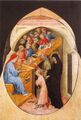 Augustine of Hippo
 -
 Augustine of Hippo
 -
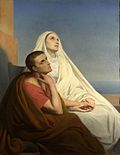 Augustine of Hippo
 -
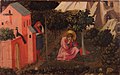 Augustine of Hippo
 -
 Augustine of Hippo
 -
 Augustine of Hippo
 -
 Augustine of Hippo
 -
 Augustine of Hippo
 -
 Augustine of Hippo
 -
 Augustine of Hippo
 -
 Augustine of Hippo
 -
 Augustine of Hippo


,_Pavia,_S._Pietro_in_Ciel_d%27Oro_16.JPG)


.jpg)
Advertise on WikiMD — 81,000+ full articles, ~900,000 total pages, ~250 million page views. Global reach, limited time promotional rates from $1/page/day. Learn more · View stats

Translate page: - East Asian
中文,
日本,
한국어,
South Asian
हिन्दी,
தமிழ்,
తెలుగు,
Urdu,
ಕನ್ನಡ,
Southeast Asian
Indonesian,
Vietnamese,
Thai,
မြန်မာဘာသာ,
বাংলা
European
español,
Deutsch,
français,
Greek,
português do Brasil,
polski,
română,
русский,
Nederlands,
norsk,
svenska,
suomi,
Italian
Middle Eastern & African
عربى,
Turkish,
Persian,
Hebrew,
Afrikaans,
isiZulu,
Kiswahili,
Other
Bulgarian,
Hungarian,
Czech,
Swedish,
മലയാളം,
मराठी,
ਪੰਜਾਬੀ,
ગુજરાતી,
Portuguese,
Ukrainian
About WikiMD • Contact • Disclaimer • Privacy • Copyright • Site statistics
Some content and images may originate from Wikimedia Commons or Wikipedia and remain subject to their stated licenses. Unless otherwise noted, eligible WikiMD content is available under CC BY-SA 4.0.
WikiMD Wellnesspedia — Free health & wellness information for patients, students, and health professionals.

