Rudolf Wagner

Rudolf Wagner (30 June 1805 – 13 May 1864) was a German anatomist and physiologist who made significant contributions to the field of neuroscience. He is best known for his research on the sensory organs and the nervous system. Wagner's work laid the groundwork for future studies in neuroanatomy and neurophysiology. Born in Bayreuth, Bavaria, Wagner studied medicine at the University of Erlangen and later at the University of Würzburg, where he was influenced by the teachings of Johann Lukas Schönlein and Rudolf Virchow, two prominent figures in the field of medicine at the time. After completing his studies, Wagner embarked on a career in academia, eventually becoming a professor at the University of Göttingen. One of Wagner's most notable contributions to science was his research on the sensory organs. He conducted detailed studies on the structure and function of the sensory systems, particularly focusing on the sense of touch and the sensory capabilities of the skin. His work in this area helped to advance the understanding of sensory perception and its underlying physiological mechanisms. In addition to his research on the sensory organs, Wagner was also interested in the structure and function of the nervous system. He was one of the first scientists to describe the myelin sheath, a protective layer that surrounds nerve fibers. This discovery was crucial for the development of neuroanatomy and contributed to a better understanding of how the nervous system operates. Wagner's contributions to science were not limited to his research findings. He was also a strong advocate for the use of microscopy in anatomical studies, recognizing the importance of this tool in uncovering the intricate details of the body's structure. Furthermore, Wagner was involved in debates on scientific ethics, particularly in relation to the use of animals in research. He promoted the idea that scientific experiments should be conducted with respect for animal welfare, a principle that remains relevant in scientific research today. Throughout his career, Wagner received numerous accolades for his contributions to science. However, his work was also met with controversy, particularly his involvement in the so-called "Wagner-Meissner corpuscle" debate, which centered around the discovery of a type of sensory receptor in the skin. Despite the controversies, Wagner's legacy in the fields of anatomy and physiology is undeniable. Rudolf Wagner died in Göttingen in 1864, but his work continues to influence the fields of neuroscience, anatomy, and physiology. His dedication to scientific research and his contributions to our understanding of the human body have made him a key figure in the history of medicine.

-
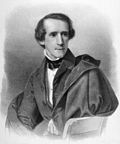 Rudolf Wagner
Ad. Transform your life with W8MD's Budget GLP-1 injections from $29.99


W8MD offers a medical weight loss program to GLP1 weight loss doctor Philadelphia. Our physician-supervised medical weight loss NYC provides:
- Weight loss injections NYC (generic and brand names):
- Zepbound / Mounjaro, Wegovy / Ozempic, Saxenda
- Learn more on Budget GLP1 weight loss injections NYC & Philadelphia GLP1 weight loss shots
- Most insurances accepted or discounted self-pay rates. We will obtain insurance prior authorizations if needed.
- Generic GLP1 weight loss injections from $29.99 for the starting dose of Semaglutide and $45.00 for Tirzepatide with insurance for the visit.
- Also offer prescription weight loss medications including Phentermine, Qsymia, Diethylpropion, Contrave etc.
NYC weight loss doctor appointmentsNYC weight loss doctor appointments
Start your NYC weight loss journey today at our NYC medical weight loss and Philadelphia medical weight loss clinics.
- Call 718-946-5500 to lose weight in NYC or for medical weight loss in Philadelphia 215-676-2334.
- Tags:GLP1 medical weight loss doctor NYC, Philadelphia lose weight Zepbound NYC, Budget GLP1 weight loss injections, Wegovy Philadelphia, Wegovy NYC, Philadelphia medical weight loss, Brookly weight loss Wegovy NYC and Best weight loss program NYC


|
WikiMD's Wellness Encyclopedia |
| Let Food Be Thy Medicine Medicine Thy Food - Hippocrates |
Medical Disclaimer: WikiMD is not a substitute for professional medical advice. The information on WikiMD is provided as an information resource only, may be incorrect, outdated or misleading, and is not to be used or relied on for any diagnostic or treatment purposes. Please consult your health care provider before making any healthcare decisions or for guidance about a specific medical condition. WikiMD expressly disclaims responsibility, and shall have no liability, for any damages, loss, injury, or liability whatsoever suffered as a result of your reliance on the information contained in this site. By visiting this site you agree to the foregoing terms and conditions, which may from time to time be changed or supplemented by WikiMD. If you do not agree to the foregoing terms and conditions, you should not enter or use this site. See full disclaimer.
Credits:Most images are courtesy of Wikimedia commons, and templates, categories Wikipedia, licensed under CC BY SA or similar.
Translate this page: - East Asian
中文,
日本,
한국어,
South Asian
हिन्दी,
தமிழ்,
తెలుగు,
Urdu,
ಕನ್ನಡ,
Southeast Asian
Indonesian,
Vietnamese,
Thai,
မြန်မာဘာသာ,
বাংলা
European
español,
Deutsch,
français,
Greek,
português do Brasil,
polski,
română,
русский,
Nederlands,
norsk,
svenska,
suomi,
Italian
Middle Eastern & African
عربى,
Turkish,
Persian,
Hebrew,
Afrikaans,
isiZulu,
Kiswahili,
Other
Bulgarian,
Hungarian,
Czech,
Swedish,
മലയാളം,
मराठी,
ਪੰਜਾਬੀ,
ગુજરાતી,
Portuguese,
Ukrainian
