Roncal cheese
Roncal cheese is a type of cheese originating from the Roncal Valley in Navarre, Spain. It is one of the first Spanish cheeses to receive the Denomination of Origin status, which it received in 1981.
Etymology[edit]
The name "Roncal" comes from the Roncal Valley, where the cheese is produced. The word "Roncal" itself is of Basque origin, meaning "ravine".
Production[edit]
Roncal cheese is made from the raw milk of Latxa and Aranzana sheep. The cheese is produced between December and July, when the sheep's milk is at its richest. The cheese is aged for a minimum of four months, and during this time it develops a hard, natural rind and a firm, slightly crumbly texture.
Characteristics[edit]
Roncal cheese has a strong, slightly piquant flavor and a buttery texture. It is typically served as a table cheese, and can also be used in cooking. The cheese is cylindrical in shape, with a diameter of 10-12 cm and a height of 8-10 cm. It weighs between 1 and 1.5 kg.
History[edit]
The production of Roncal cheese has a long history in the Roncal Valley, with records of cheese production dating back to the 13th century. The cheese was traditionally made in individual farmhouses, but in the 20th century production was consolidated into seven municipal dairies.
See also[edit]

This WikiMD article can only be edited by registered and verified editors. You can log in or register.
-
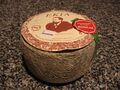 Roncal cheese


Medical Disclaimer: WikiMD is for informational purposes only and is not a substitute for professional medical advice. Content may be inaccurate or outdated and should not be used for diagnosis or treatment. Always consult your healthcare provider for medical decisions. Verify information with trusted sources such as CDC.gov and NIH.gov. By using this site, you agree that WikiMD is not liable for any outcomes related to its content. See full disclaimer.
Credits:Most images are courtesy of Wikimedia commons, and templates, categories Wikipedia, licensed under CC BY SA or similar.
Translate page: - East Asian
中文,
日本,
한국어,
South Asian
हिन्दी,
தமிழ்,
తెలుగు,
Urdu,
ಕನ್ನಡ,
Southeast Asian
Indonesian,
Vietnamese,
Thai,
မြန်မာဘာသာ,
বাংলা
European
español,
Deutsch,
français,
Greek,
português do Brasil,
polski,
română,
русский,
Nederlands,
norsk,
svenska,
suomi,
Italian
Middle Eastern & African
عربى,
Turkish,
Persian,
Hebrew,
Afrikaans,
isiZulu,
Kiswahili,
Other
Bulgarian,
Hungarian,
Czech,
Swedish,
മലയാളം,
मराठी,
ਪੰਜਾਬੀ,
ગુજરાતી,
Portuguese,
Ukrainian

