Rhinosporidium seeberi
Rhinosporidium seeberi is a microorganism that is the causative agent of rhinosporidiosis, a disease primarily affecting the mucous membranes of the nose and eyes. It was first described by Guillermo Seeber in 1900. Despite its name, it is not a true fungus, but a unique organism with characteristics of both fungi and protists.
Taxonomy[edit]
The taxonomy of Rhinosporidium seeberi has been a subject of debate. It was initially classified as a fungus due to its morphological similarities with fungal organisms. However, molecular studies have shown that it is more closely related to the protists, specifically the group Mesomycetozoea. This group also includes the fish pathogen Ichthyophonus hoferi.
Life Cycle[edit]
The life cycle of Rhinosporidium seeberi is complex and not fully understood. It is known to involve a spore stage, during which the organism is infectious. The spores are released into the environment, where they can be inhaled or come into contact with the mucous membranes of a new host. Once inside the host, the spores develop into larger structures called trophozoites, which eventually mature into spore-filled structures known as sporangia.
Pathogenesis and Clinical Features[edit]
Rhinosporidium seeberi causes rhinosporidiosis, a chronic infection of the mucous membranes. The most common sites of infection are the nose and eyes, but other areas such as the skin and genitals can also be affected. Symptoms include nasal obstruction, epistaxis (nosebleeds), and masses or polyps in the affected areas. In the eye, it can cause conjunctivitis and other complications.
Diagnosis and Treatment[edit]
Diagnosis of rhinosporidiosis is typically made by microscopic examination of tissue samples, where the characteristic sporangia of Rhinosporidium seeberi can be seen. Treatment involves surgical removal of the affected tissue, often followed by antifungal therapy to prevent recurrence. However, the disease is known to recur in many cases.
Epidemiology[edit]
Rhinosporidiosis is most common in tropical and subtropical regions, particularly in India and Sri Lanka. It is thought to be associated with bathing in stagnant water, where the spores of Rhinosporidium seeberi may be present.

This WikiMD article can only be edited by registered and verified editors. You can log in or register.
| This medical article is a stub. You can help WikiMD by expanding the page. |
Rhinosporidium seeberi gallery[edit]
-
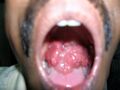 Rhinosporidiosis


Medical Disclaimer: WikiMD is for informational purposes only and is not a substitute for professional medical advice. Content may be inaccurate or outdated and should not be used for diagnosis or treatment. Always consult your healthcare provider for medical decisions. Verify information with trusted sources such as CDC.gov and NIH.gov. By using this site, you agree that WikiMD is not liable for any outcomes related to its content. See full disclaimer.
Credits:Most images are courtesy of Wikimedia commons, and templates, categories Wikipedia, licensed under CC BY SA or similar.
Translate page: - East Asian
中文,
日本,
한국어,
South Asian
हिन्दी,
தமிழ்,
తెలుగు,
Urdu,
ಕನ್ನಡ,
Southeast Asian
Indonesian,
Vietnamese,
Thai,
မြန်မာဘာသာ,
বাংলা
European
español,
Deutsch,
français,
Greek,
português do Brasil,
polski,
română,
русский,
Nederlands,
norsk,
svenska,
suomi,
Italian
Middle Eastern & African
عربى,
Turkish,
Persian,
Hebrew,
Afrikaans,
isiZulu,
Kiswahili,
Other
Bulgarian,
Hungarian,
Czech,
Swedish,
മലയാളം,
मराठी,
ਪੰਜਾਬੀ,
ગુજરાતી,
Portuguese,
Ukrainian

