Refraction
Refraction is a physical phenomenon that often occurs when waves pass from one medium to another. This is most commonly observed when a wave passes from one transparent medium to another. This causes the wave to change its speed and direction. The amount of change in wave speed is dependent on the properties of the two media. This is the principle that allows lenses and prisms to work, as well as the eye and the microscope.
Explanation[edit]
When a wave reaches the boundary between one medium and another, part of the wave is reflected back into the first medium while the rest of it passes into the second medium. The part of the wave that enters the second medium is refracted, or bent. The amount of bending, or angle of refraction, of the wave depends on the properties of the two media and the wavelength of the wave.
Applications[edit]
Refraction has many applications in optics and technology. A lens uses refraction to form an image of an object for many different purposes, such as in a camera, telescope, or eyeglasses. A prism uses refraction to spread light out into its different color components, creating a spectrum.
See also[edit]
References[edit]
 | This medical article is a stub. You can help WikiMD by expanding the page. |
-
 Refraction photo
 -
 Snell's law
 -
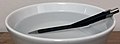 Pen in water
 -
 Refraction animation
 -
 Hetch Hetchy Releases
 -
 Pencil in a bowl of water
 -
 GGB reflection in raindrops
 -
 Mirage principle
 -
 Blackbird sunset
 -
 Tupton
 -
 Mirage over a hot road
 -
 Beach and waves


.jpg)


.jpg)
Medical Disclaimer: WikiMD is for informational purposes only and is not a substitute for professional medical advice. Content may be inaccurate or outdated and should not be used for diagnosis or treatment. Always consult your healthcare provider for medical decisions. Verify information with trusted sources such as CDC.gov and NIH.gov. By using this site, you agree that WikiMD is not liable for any outcomes related to its content. See full disclaimer.
Credits:Most images are courtesy of Wikimedia commons, and templates, categories Wikipedia, licensed under CC BY SA or similar.
Translate this page: - East Asian
中文,
日本,
한국어,
South Asian
हिन्दी,
தமிழ்,
తెలుగు,
Urdu,
ಕನ್ನಡ,
Southeast Asian
Indonesian,
Vietnamese,
Thai,
မြန်မာဘာသာ,
বাংলা
European
español,
Deutsch,
français,
Greek,
português do Brasil,
polski,
română,
русский,
Nederlands,
norsk,
svenska,
suomi,
Italian
Middle Eastern & African
عربى,
Turkish,
Persian,
Hebrew,
Afrikaans,
isiZulu,
Kiswahili,
Other
Bulgarian,
Hungarian,
Czech,
Swedish,
മലയാളം,
मराठी,
ਪੰਜਾਬੀ,
ગુજરાતી,
Portuguese,
Ukrainian

