Red imported fire ant
Red Imported Fire Ant (Solenopsis invicta), often abbreviated as RIFA, is a species of ant native to South America. Since its accidental introduction to the United States in the 1930s, it has spread to many warm, southern regions of the country, becoming a significant public health concern and ecological disruptor. The Red Imported Fire Ant is known for its aggressive behavior, especially towards humans and animals that disturb its nests, delivering painful stings that can result in allergic reactions.
Description[edit]
The Red Imported Fire Ant is small, with workers averaging 3.2 to 6.4 mm in length. The ants are reddish-brown to reddish-black in color. Their nests are usually mounds of soil outdoors, which can reach up to 40 cm in height and are often located in sunny areas. These ants exhibit a high degree of social organization, with colonies that can contain over 200,000 individuals.
Behavior[edit]
RIFA is omnivorous, feeding on proteins, lipids, and carbohydrates found in seeds, fruits, and other insects. They are known for their aggressive defense of their nests, swarming and stinging any perceived threats. The venom of the Red Imported Fire Ant contains a potent alkaloid toxin, which can cause intense pain, swelling, and in rare cases, severe allergic reactions or anaphylaxis.
Impact[edit]
Ecological[edit]
The introduction of RIFA has had a profound impact on local ecosystems. They outcompete native ant species for resources, leading to a decrease in biodiversity. Additionally, their predation on ground-nesting wildlife, such as birds and reptiles, has contributed to declines in some native populations.
Economic[edit]
The economic impact of RIFA infestations is significant, affecting agricultural production, property values, and public health costs. In agriculture, they damage crops and equipment, while in urban areas, their nests can undermine structures and damage electrical equipment.
Public Health[edit]
RIFA stings can result in a spectrum of medical issues, ranging from localized pain and swelling to severe allergic reactions. Public health efforts focus on educating the public about avoiding ant mounds and managing allergic reactions to stings.
Management[edit]
Management of RIFA infestations includes chemical treatments, biological control methods, and public education. Chemical baits and direct nest treatments are effective but require careful application to minimize environmental impact. Biological control efforts include the introduction of natural predators, such as phorid flies, which specifically target RIFA.
See Also[edit]
References[edit]
<references/>

Red_imported_fire_ant[edit]
-
 Fire ants
 -
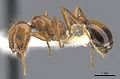 Specimen CASENT0902350 Solenopsis invicta
 -
 Specimen CASENT0902350 Solenopsis invicta label
 -
 Solenopsis invicta casent0005804 head
 -
 Solenopsis richteri casent0103101 head
 -
 Solenopsis invicta - fire ant worker
 -
 Solenopsis invicta casent0005804 profile
 -
 Invicta hatching


Ad. Transform your life with W8MD's
GLP-1 weight loss injections special from $29.99 with insurance
|
WikiMD Medical Encyclopedia |
Medical Disclaimer: WikiMD is for informational purposes only and is not a substitute for professional medical advice. Content may be inaccurate or outdated and should not be used for diagnosis or treatment. Always consult your healthcare provider for medical decisions. Verify information with trusted sources such as CDC.gov and NIH.gov. By using this site, you agree that WikiMD is not liable for any outcomes related to its content. See full disclaimer.
Credits:Most images are courtesy of Wikimedia commons, and templates, categories Wikipedia, licensed under CC BY SA or similar.
Translate this page: - East Asian
中文,
日本,
한국어,
South Asian
हिन्दी,
தமிழ்,
తెలుగు,
Urdu,
ಕನ್ನಡ,
Southeast Asian
Indonesian,
Vietnamese,
Thai,
မြန်မာဘာသာ,
বাংলা
European
español,
Deutsch,
français,
Greek,
português do Brasil,
polski,
română,
русский,
Nederlands,
norsk,
svenska,
suomi,
Italian
Middle Eastern & African
عربى,
Turkish,
Persian,
Hebrew,
Afrikaans,
isiZulu,
Kiswahili,
Other
Bulgarian,
Hungarian,
Czech,
Swedish,
മലയാളം,
मराठी,
ਪੰਜਾਬੀ,
ગુજરાતી,
Portuguese,
Ukrainian
