Rappie pie
Rappie pie is a traditional Acadian dish made primarily from grated potatoes. The dish's name is derived from the French word râpé, which means grated. Although it has a few variations, the most common ingredients are potatoes, chicken, and onions.
History[edit]
Rappie pie has its roots in the Acadian expulsion in the 18th century. The Acadians were deported by the British in 1755 from what is now Nova Scotia, New Brunswick, and Prince Edward Island. Many of them settled in Louisiana, where they became known as Cajuns, but some returned to Nova Scotia and brought with them the recipe for rappie pie.
Preparation[edit]
The preparation of rappie pie is labor-intensive. It begins with grating potatoes, then removing the liquid from the grated potatoes to form a potato pulp. The liquid is then replaced with hot broth made from chicken or pork. The mixture is spread in a deep dish, layered with cooked meat, usually chicken, but sometimes pork or clams, and topped with more of the potato mixture. The dish is then baked until it has a crispy crust.
Cultural Significance[edit]
Rappie pie is a significant part of Acadian culture. It is often served at family gatherings, community suppers, and special occasions. It is also a popular dish at Acadian festivals, such as the Festival Acadien de Clare in Nova Scotia.
Variations[edit]
There are several variations of rappie pie. Some recipes use different types of meat, such as beef or clams, while others add vegetables like carrots and peas. Some versions are vegetarian, using vegetable broth instead of chicken or pork broth.
See Also[edit]

-
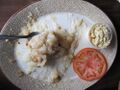 Rappie pie


Medical Disclaimer: WikiMD is for informational purposes only and is not a substitute for professional medical advice. Content may be inaccurate or outdated and should not be used for diagnosis or treatment. Always consult your healthcare provider for medical decisions. Verify information with trusted sources such as CDC.gov and NIH.gov. By using this site, you agree that WikiMD is not liable for any outcomes related to its content. See full disclaimer.
Credits:Most images are courtesy of Wikimedia commons, and templates, categories Wikipedia, licensed under CC BY SA or similar.
Translate page: - East Asian
中文,
日本,
한국어,
South Asian
हिन्दी,
தமிழ்,
తెలుగు,
Urdu,
ಕನ್ನಡ,
Southeast Asian
Indonesian,
Vietnamese,
Thai,
မြန်မာဘာသာ,
বাংলা
European
español,
Deutsch,
français,
Greek,
português do Brasil,
polski,
română,
русский,
Nederlands,
norsk,
svenska,
suomi,
Italian
Middle Eastern & African
عربى,
Turkish,
Persian,
Hebrew,
Afrikaans,
isiZulu,
Kiswahili,
Other
Bulgarian,
Hungarian,
Czech,
Swedish,
മലയാളം,
मराठी,
ਪੰਜਾਬੀ,
ગુજરાતી,
Portuguese,
Ukrainian

