Radioisotope renography
Radioisotope renography is a form of medical imaging that uses radioactive decay to generate images of the kidneys. This technique is primarily used to evaluate renal function and diagnose certain kidney disorders.
Overview[edit]
Radioisotope renography involves the injection of a radioisotope, typically Technetium-99m, into the patient's bloodstream. This radioisotope emits gamma rays that can be detected by a gamma camera. The camera tracks the movement of the radioisotope through the kidneys, allowing physicians to assess renal function and identify any abnormalities.
Procedure[edit]
The procedure begins with the patient lying on a table beneath the gamma camera. A healthcare professional then injects the radioisotope into a vein, usually in the arm. The patient is asked to remain still as the camera captures images of the kidneys. The entire procedure typically takes about an hour.
Applications[edit]
Radioisotope renography is used to diagnose a variety of kidney disorders, including renal artery stenosis, hydronephrosis, and renal failure. It can also be used to monitor the progress of patients who have undergone kidney transplantation.
Risks and Complications[edit]
As with any procedure involving radiation, there is a small risk of radiation exposure. However, the amount of radiation used in radioisotope renography is typically very low. Other potential complications include allergic reactions to the radioisotope and discomfort at the injection site.
See Also[edit]
 | This medical article is a stub. You can help WikiMD by expanding the page. |
Radioisotope renography[edit]
-
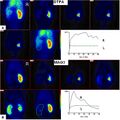 99mTc-MAG3 and 99mTc-DTPA renogram
 -
 Technetium Tc 99m mertiatide


Medical Disclaimer: WikiMD is for informational purposes only and is not a substitute for professional medical advice. Content may be inaccurate or outdated and should not be used for diagnosis or treatment. Always consult your healthcare provider for medical decisions. Verify information with trusted sources such as CDC.gov and NIH.gov. By using this site, you agree that WikiMD is not liable for any outcomes related to its content. See full disclaimer.
Credits:Most images are courtesy of Wikimedia commons, and templates, categories Wikipedia, licensed under CC BY SA or similar.
Translate page: - East Asian
中文,
日本,
한국어,
South Asian
हिन्दी,
தமிழ்,
తెలుగు,
Urdu,
ಕನ್ನಡ,
Southeast Asian
Indonesian,
Vietnamese,
Thai,
မြန်မာဘာသာ,
বাংলা
European
español,
Deutsch,
français,
Greek,
português do Brasil,
polski,
română,
русский,
Nederlands,
norsk,
svenska,
suomi,
Italian
Middle Eastern & African
عربى,
Turkish,
Persian,
Hebrew,
Afrikaans,
isiZulu,
Kiswahili,
Other
Bulgarian,
Hungarian,
Czech,
Swedish,
മലയാളം,
मराठी,
ਪੰਜਾਬੀ,
ગુજરાતી,
Portuguese,
Ukrainian

