Quail as food
Quail, a small game bird, is a popular food source in many parts of the world. It is known for its delicate flavor and high nutritional value.
History[edit]
Quail has been consumed as food for centuries. Historical records indicate that quail was a common food source in ancient Egypt and Rome. In the Middle Ages, quail was considered a delicacy and was often served at royal banquets.
Nutritional Value[edit]
Quail is a lean source of protein and is rich in vitamins and minerals. It is particularly high in Vitamin B, iron, and potassium. Quail eggs are also highly nutritious, containing significant amounts of Vitamin B12 and selenium.
Preparation and Cooking[edit]
Quail can be prepared in a variety of ways. It can be roasted, grilled, or braised. Quail eggs can be boiled, fried, or used in baking.
Quail Dishes Around the World[edit]
Different cultures have their own unique ways of preparing and serving quail. In France, quail is often stuffed and roasted. In the Southern United States, quail is commonly fried. In Japan, quail eggs are often used in sushi.
Quail Farming[edit]
Quail farming, also known as quailiculture, is the process of raising quails for their meat and eggs. It is a profitable business in many parts of the world due to the high demand for quail products.
Health Considerations[edit]
While quail is generally considered safe to eat, there are some health considerations to keep in mind. Quail can carry diseases like salmonella, so it is important to handle and cook it properly.
Conclusion[edit]
Quail is a versatile and nutritious food source that has been enjoyed by people around the world for centuries. Whether it's served roasted, grilled, or in sushi, quail offers a unique flavor that is sure to delight the palate.
See Also[edit]
-
 Quail Saltimbocca with Polenta Fritter
 -
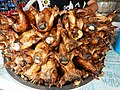 Quail as food
.jpg)


Medical Disclaimer: WikiMD is for informational purposes only and is not a substitute for professional medical advice. Content may be inaccurate or outdated and should not be used for diagnosis or treatment. Always consult your healthcare provider for medical decisions. Verify information with trusted sources such as CDC.gov and NIH.gov. By using this site, you agree that WikiMD is not liable for any outcomes related to its content. See full disclaimer.
Credits:Most images are courtesy of Wikimedia commons, and templates, categories Wikipedia, licensed under CC BY SA or similar.
Translate page: - East Asian
中文,
日本,
한국어,
South Asian
हिन्दी,
தமிழ்,
తెలుగు,
Urdu,
ಕನ್ನಡ,
Southeast Asian
Indonesian,
Vietnamese,
Thai,
မြန်မာဘာသာ,
বাংলা
European
español,
Deutsch,
français,
Greek,
português do Brasil,
polski,
română,
русский,
Nederlands,
norsk,
svenska,
suomi,
Italian
Middle Eastern & African
عربى,
Turkish,
Persian,
Hebrew,
Afrikaans,
isiZulu,
Kiswahili,
Other
Bulgarian,
Hungarian,
Czech,
Swedish,
മലയാളം,
मराठी,
ਪੰਜਾਬੀ,
ગુજરાતી,
Portuguese,
Ukrainian

