Prunus serrulata
Species of cherry tree
Prunus serrulata, commonly known as the Japanese cherry or sakura, is a species of cherry tree native to Japan, Korea, and China. It is renowned for its beautiful and abundant blossoms, which are celebrated in various cultural festivals, particularly in Japan.
Description[edit]

Prunus serrulata is a deciduous tree that typically grows to a height of 8 to 12 meters. The tree has a broad, spreading crown and smooth, gray bark. The leaves are ovate to lanceolate, with serrated edges, and turn vibrant shades of red and orange in the autumn.
The flowers of Prunus serrulata are its most distinctive feature. They bloom in clusters, ranging from pale pink to white, and are often double-flowered. The blooming period is short, typically lasting only a week or two in early spring, but it is a spectacular sight that attracts many visitors.
Cultivation[edit]
Prunus serrulata is widely cultivated for its ornamental value. It thrives in well-drained soil and prefers full sun to partial shade. The tree is hardy in USDA zones 5 through 8 and requires minimal maintenance once established.

Numerous cultivars have been developed, each with unique characteristics in terms of flower color, size, and blooming time. Some popular cultivars include 'Kanzan', 'Shirotae', and 'Shogetsu'.
Cultural Significance[edit]
In Japan, the cherry blossom, or sakura, is a symbol of the transient nature of life, as the blossoms are beautiful but short-lived. Hanami, the traditional custom of enjoying the beauty of cherry blossoms, is a popular activity during the blooming season.
Uses[edit]
While primarily grown for ornamental purposes, the wood of Prunus serrulata is sometimes used in woodworking. The blossoms are also used in various culinary applications, such as sakura tea and sakura mochi, a type of Japanese confectionery.
Related pages[edit]
Gallery[edit]
-
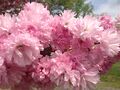 Flowering cherry along a roadway
 -
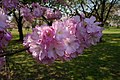 Close-up of Prunus serrulata blossoms
 -
 Another view of Prunus serrulata in Kenrokuen


Medical Disclaimer: WikiMD is for informational purposes only and is not a substitute for professional medical advice. Content may be inaccurate or outdated and should not be used for diagnosis or treatment. Always consult your healthcare provider for medical decisions. Verify information with trusted sources such as CDC.gov and NIH.gov. By using this site, you agree that WikiMD is not liable for any outcomes related to its content. See full disclaimer.
Credits:Most images are courtesy of Wikimedia commons, and templates, categories Wikipedia, licensed under CC BY SA or similar.
Translate page: - East Asian
中文,
日本,
한국어,
South Asian
हिन्दी,
தமிழ்,
తెలుగు,
Urdu,
ಕನ್ನಡ,
Southeast Asian
Indonesian,
Vietnamese,
Thai,
မြန်မာဘာသာ,
বাংলা
European
español,
Deutsch,
français,
Greek,
português do Brasil,
polski,
română,
русский,
Nederlands,
norsk,
svenska,
suomi,
Italian
Middle Eastern & African
عربى,
Turkish,
Persian,
Hebrew,
Afrikaans,
isiZulu,
Kiswahili,
Other
Bulgarian,
Hungarian,
Czech,
Swedish,
മലയാളം,
मराठी,
ਪੰਜਾਬੀ,
ગુજરાતી,
Portuguese,
Ukrainian

