Propolis
Propolis is a resinous substance collected by honeybees from tree buds, sap flows, or other botanical sources. It is used by bees to seal unwanted gaps in the hive and to protect the hive from external threats. Propolis has been used by humans for its medicinal properties for thousands of years.
Composition[edit]
Propolis is composed of resins, waxes, essential oils, pollen, and other organic compounds. The exact composition of propolis can vary depending on the location of the bees and the types of trees and flowers they have access to. However, approximately 50% of propolis is made up of resins and vegetable balsam, 30% is waxes, 10% is essential and aromatic oils, 5% is pollen, and 5% is other substances, including organic debris.
Medicinal Uses[edit]
Propolis has been used in traditional medicine for thousands of years. It has been used to treat a variety of ailments, including wounds, burns, and skin infections. Propolis has also been used to boost the immune system and to treat colds and flu. Recent scientific studies have shown that propolis has antimicrobial, anti-inflammatory, and antioxidant properties. However, more research is needed to fully understand the potential medicinal uses of propolis.
Potential Risks[edit]
While propolis is generally considered safe for most people, it can cause allergic reactions in some individuals, particularly those who are allergic to bees or bee products. Symptoms of an allergic reaction can include swelling, redness, itching, and in severe cases, anaphylaxis. It is recommended that individuals consult with a healthcare provider before starting any new treatment or supplement, including propolis.
See Also[edit]
 | This bee-related article is a stub. You can help WikiMD by expanding the page. |
 | This medical article is a stub. You can help WikiMD by expanding the page. |
-
 Propolis
 -
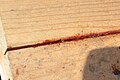 Propolized bars joined together
 -
 Propolized bars pulled apart
 -
 Propolis drops
 -
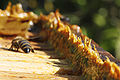 Propolis in beehives


Medical Disclaimer: WikiMD is for informational purposes only and is not a substitute for professional medical advice. Content may be inaccurate or outdated and should not be used for diagnosis or treatment. Always consult your healthcare provider for medical decisions. Verify information with trusted sources such as CDC.gov and NIH.gov. By using this site, you agree that WikiMD is not liable for any outcomes related to its content. See full disclaimer.
Credits:Most images are courtesy of Wikimedia commons, and templates, categories Wikipedia, licensed under CC BY SA or similar.
Translate this page: - East Asian
中文,
日本,
한국어,
South Asian
हिन्दी,
தமிழ்,
తెలుగు,
Urdu,
ಕನ್ನಡ,
Southeast Asian
Indonesian,
Vietnamese,
Thai,
မြန်မာဘာသာ,
বাংলা
European
español,
Deutsch,
français,
Greek,
português do Brasil,
polski,
română,
русский,
Nederlands,
norsk,
svenska,
suomi,
Italian
Middle Eastern & African
عربى,
Turkish,
Persian,
Hebrew,
Afrikaans,
isiZulu,
Kiswahili,
Other
Bulgarian,
Hungarian,
Czech,
Swedish,
മലയാളം,
मराठी,
ਪੰਜਾਬੀ,
ગુજરાતી,
Portuguese,
Ukrainian
