Primula vulgaris
Primula vulgaris, also known as the common primrose, is a species of flowering plant in the family Primulaceae, native to western and southern Europe.
Description[edit]
Primula vulgaris is a perennial growing to 10cm (4in) by 10cm (4in). The flowers are hermaphrodite (have both male and female organs) and are pollinated by bees, lepidoptera (moths & butterflies). The plant is self-fertile. It is noted for attracting wildlife.
Distribution and habitat[edit]
The Primula vulgaris is native to western and southern Europe, including the British Isles. The plant is found in woods, coppices and hedgerows, on acid and calcareous soils. It is also found on open grassland, as it is in parts of Staffordshire and Cheshire in England, where it may be of garden escape origin.
Cultivation[edit]
The Primula vulgaris is grown in gardens for its attractive yellow flowers. It is hardy to zone (UK) 5 and is not frost tender. It is in flower from February to May, and the seeds ripen from April to June. The species is hermaphrodite (has both male and female organs) and is pollinated by Bees, Lepidoptera (Moths & Butterflies). The plant is self-fertile.
Uses[edit]
The leaves of Primula vulgaris are edible and can be used in salads. The flowers are also edible and can be used to decorate salads or in desserts. The plant has been used in traditional medicine, particularly in the treatment of coughs and colds.
Conservation[edit]
The Primula vulgaris is not currently considered to be at risk. However, like all wild plants, it should not be picked from the wild.
See also[edit]

This flora-related article is a stub. You can help WikiMD by expanding it.
-
 Primula vulgaris
 -
 Primula vulgaris
 -
 Primula vulgaris
 -
 Primula vulgaris
 -
 Primula vulgaris
 -
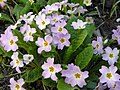 Primula vulgaris
 -
 Primula vulgaris
 -
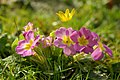 Primula vulgaris
 -
 Primula vulgaris
 -
 Primula vulgaris


.jpg)


Medical Disclaimer: WikiMD is for informational purposes only and is not a substitute for professional medical advice. Content may be inaccurate or outdated and should not be used for diagnosis or treatment. Always consult your healthcare provider for medical decisions. Verify information with trusted sources such as CDC.gov and NIH.gov. By using this site, you agree that WikiMD is not liable for any outcomes related to its content. See full disclaimer.
Credits:Most images are courtesy of Wikimedia commons, and templates, categories Wikipedia, licensed under CC BY SA or similar.
Translate page: - East Asian
中文,
日本,
한국어,
South Asian
हिन्दी,
தமிழ்,
తెలుగు,
Urdu,
ಕನ್ನಡ,
Southeast Asian
Indonesian,
Vietnamese,
Thai,
မြန်မာဘာသာ,
বাংলা
European
español,
Deutsch,
français,
Greek,
português do Brasil,
polski,
română,
русский,
Nederlands,
norsk,
svenska,
suomi,
Italian
Middle Eastern & African
عربى,
Turkish,
Persian,
Hebrew,
Afrikaans,
isiZulu,
Kiswahili,
Other
Bulgarian,
Hungarian,
Czech,
Swedish,
മലയാളം,
मराठी,
ਪੰਜਾਬੀ,
ગુજરાતી,
Portuguese,
Ukrainian

