Food preservation
Food preservation refers to the processes and techniques used to prevent food spoilage, food poisoning, and other foodborne diseases. It involves controlling the environmental conditions to inhibit the growth of microorganisms and slow down the oxidation of fats to maintain food quality.
History of Food Preservation[edit]
The history of food preservation dates back to ancient times. Early humans used simple methods like drying, smoking, and fermenting to preserve food. The discovery of canning and pasteurization in the 19th century revolutionized food preservation, making it possible to store food for longer periods and transport it over long distances.
Methods of Food Preservation[edit]
There are several methods of food preservation, each with its unique mechanism and purpose.
Drying[edit]
Drying is one of the oldest methods of food preservation. It involves removing water from food to inhibit the growth of microorganisms. Drying can be done naturally in the sun or artificially using a dehydrator or oven.
Canning[edit]
Canning involves sealing food in airtight containers and heating it to kill microorganisms. The process also creates a vacuum seal that prevents air from entering the container, thereby inhibiting the growth of bacteria, yeasts, and molds.
Freezing[edit]
Freezing slows down the metabolic and enzymatic activities of microorganisms and food enzymes, thereby preserving the food. It is one of the most common methods of food preservation used today.
Fermentation[edit]
Fermentation involves the conversion of carbohydrates to alcohols and carbon dioxide or organic acids using yeasts, bacteria, or a combination thereof, under anaerobic conditions. Fermentation is used in the making of many foods and beverages, including bread, yogurt, and wine.
Health and Safety[edit]
Food preservation must be done correctly to ensure food safety. Incorrectly preserved food can lead to foodborne illnesses, including botulism, a potentially fatal disease caused by the bacterium Clostridium botulinum.
See Also[edit]

-
 Food lab scientist packages food for spaceflight
 -
 Preserved food
 -
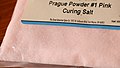 Prague powder No. 1
 -
 Nisin
Nisin -
 The State of Food and Agriculture 2019: Moving forward on food loss and waste reduction, In brief


Ad. Transform your health with W8MD Weight Loss, Sleep & MedSpa

Tired of being overweight?
Get started with evidence based, physician-supervised
affordable GLP-1 weight loss injections
Now available in New York City and Philadelphia:
- Semaglutide starting from $59.99/week and up
- Tirzepatide starting from $69.99/week and up (dose dependent)
✔ Evidence-based medical weight loss ✔ Insurance-friendly visits available ✔ Same-week appointments, evenings & weekends
Learn more:
Start your transformation today with W8MD weight loss centers.
|
WikiMD Medical Encyclopedia |
Medical Disclaimer: WikiMD is for informational purposes only and is not a substitute for professional medical advice. Content may be inaccurate or outdated and should not be used for diagnosis or treatment. Always consult your healthcare provider for medical decisions. Verify information with trusted sources such as CDC.gov and NIH.gov. By using this site, you agree that WikiMD is not liable for any outcomes related to its content. See full disclaimer.
Credits:Most images are courtesy of Wikimedia commons, and templates, categories Wikipedia, licensed under CC BY SA or similar.
Translate this page: - East Asian
中文,
日本,
한국어,
South Asian
हिन्दी,
தமிழ்,
తెలుగు,
Urdu,
ಕನ್ನಡ,
Southeast Asian
Indonesian,
Vietnamese,
Thai,
မြန်မာဘာသာ,
বাংলা
European
español,
Deutsch,
français,
Greek,
português do Brasil,
polski,
română,
русский,
Nederlands,
norsk,
svenska,
suomi,
Italian
Middle Eastern & African
عربى,
Turkish,
Persian,
Hebrew,
Afrikaans,
isiZulu,
Kiswahili,
Other
Bulgarian,
Hungarian,
Czech,
Swedish,
മലയാളം,
मराठी,
ਪੰਜਾਬੀ,
ગુજરાતી,
Portuguese,
Ukrainian
