Potenza
Potenza is the capital city of the Basilicata region in southern Italy. It is the highest regional capital and one of the highest provincial capitals in Italy, overlooking the valley of the Basento river in the Apennine Mountains of Lucania, east of Salerno. Its territory is bounded by the comuni of Anzi, Avigliano, Brindisi Montagna, Picerno, Pietragalla, Pignola, Ruvo del Monte, and Tito.
History[edit]
Potenza, like the rest of the region, has had a long and varied history. The city has been inhabited since prehistoric times, with archaeological evidence of human settlement dating back to the 12th century BC. It was originally a settlement of the Oenotrians, and later became part of the Roman Empire. In the Middle Ages, the city was a Byzantine possession, and later, it was owned by the Normans, the Swabians, and the Angevins.
Geography[edit]
Potenza is located in the southern part of Italy, in the region of Basilicata. The city is situated on a hilltop at an elevation of 819 meters, making it one of the highest cities in Italy. The city overlooks the Basento river valley and is surrounded by the Apennine Mountains.
Economy[edit]
The economy of Potenza is based on a mix of agriculture, industry, and services. The city is known for its production of cereals, vegetables, wine, and dairy products. The industrial sector is dominated by the manufacturing of furniture, clothing, and other consumer goods. The service sector, including government, education, health, and retail, is the largest part of the economy.
Culture[edit]
Potenza has a rich cultural heritage, with numerous churches, palaces, and archaeological sites. The city is home to the University of Basilicata, the Provincial Archaeological Museum, and the Rocco Rinaldi Art Gallery. The city's cultural calendar includes the annual Potenza Film Festival and the Potenza International Music Festival.
Cuisine[edit]
The cuisine of Potenza is typical of the Basilicata region, with a focus on simple, locally sourced ingredients. Dishes often feature lamb, pork, and locally grown vegetables. The city is also known for its bread, made with durum wheat, and its wine, particularly the red Aglianico del Vulture.
 | This Italy-related article is a stub. You can help WikiMD by expanding the page. |

-
 Piazza Duomo in Potenza
 -
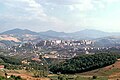 View of Potenza
 -
 Duomo and National Museum
 -
 Potenza, Italia


Medical Disclaimer: WikiMD is for informational purposes only and is not a substitute for professional medical advice. Content may be inaccurate or outdated and should not be used for diagnosis or treatment. Always consult your healthcare provider for medical decisions. Verify information with trusted sources such as CDC.gov and NIH.gov. By using this site, you agree that WikiMD is not liable for any outcomes related to its content. See full disclaimer.
Credits:Most images are courtesy of Wikimedia commons, and templates, categories Wikipedia, licensed under CC BY SA or similar.
Translate page: - East Asian
中文,
日本,
한국어,
South Asian
हिन्दी,
தமிழ்,
తెలుగు,
Urdu,
ಕನ್ನಡ,
Southeast Asian
Indonesian,
Vietnamese,
Thai,
မြန်မာဘာသာ,
বাংলা
European
español,
Deutsch,
français,
Greek,
português do Brasil,
polski,
română,
русский,
Nederlands,
norsk,
svenska,
suomi,
Italian
Middle Eastern & African
عربى,
Turkish,
Persian,
Hebrew,
Afrikaans,
isiZulu,
Kiswahili,
Other
Bulgarian,
Hungarian,
Czech,
Swedish,
മലയാളം,
मराठी,
ਪੰਜਾਬੀ,
ગુજરાતી,
Portuguese,
Ukrainian

