Police brutality
Police brutality is the excessive and unnecessary use of force by law enforcement officers. It is a violation of a person's human rights and is often associated with other forms of police misconduct, such as racial profiling, police corruption, and illegal surveillance.
Definition[edit]
Police brutality is defined as the use of excessive and/or unnecessary force by police when dealing with civilians. "Excessive use of force" means a force well beyond what would be necessary in order to handle a situation. This can be physical attacks such as assault or non-physical attacks such as verbal abuse or psychological intimidation.
History[edit]
The history of police brutality is a long and complex one, with roots in the establishment of law enforcement itself. It has been a persistent issue in many societies, from the Roman Empire to modern-day United States and United Kingdom. The issue has gained significant attention in recent years due to high-profile cases and the rise of movements such as Black Lives Matter.
Causes[edit]
There are many potential causes of police brutality, including institutional racism, lack of accountability, and a culture of violence within certain police departments. Other factors can include poor training, lack of discipline, and the militarization of the police.
Effects[edit]
The effects of police brutality can be devastating, leading to physical injuries, psychological trauma, and even death. It can also lead to widespread distrust and fear of the police, undermining their ability to effectively serve their communities.
Prevention[edit]
Preventing police brutality involves a combination of policy changes, increased accountability, and cultural shifts within police departments. This can include implementing body cameras, improving training, and establishing independent oversight bodies.
See also[edit]
 | This law enforcement–related article is a stub. You can help WikiMD by expanding the page. |
 | This human rights-related article is a stub. You can help WikiMD by expanding the page. |
Police_brutality[edit]
-
 Protest against police brutality in Montreal
 -
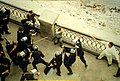 Police brutality in Egypt
 -
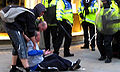 Ian Tomlinson remonstrates with police
 -
 Citizens protest police terror
 -
 NSW police use illegal pain hold on activist at University of Sydney

.jpg)


Medical Disclaimer: WikiMD is for informational purposes only and is not a substitute for professional medical advice. Content may be inaccurate or outdated and should not be used for diagnosis or treatment. Always consult your healthcare provider for medical decisions. Verify information with trusted sources such as CDC.gov and NIH.gov. By using this site, you agree that WikiMD is not liable for any outcomes related to its content. See full disclaimer.
Credits:Most images are courtesy of Wikimedia commons, and templates, categories Wikipedia, licensed under CC BY SA or similar.
Translate page: - East Asian
中文,
日本,
한국어,
South Asian
हिन्दी,
தமிழ்,
తెలుగు,
Urdu,
ಕನ್ನಡ,
Southeast Asian
Indonesian,
Vietnamese,
Thai,
မြန်မာဘာသာ,
বাংলা
European
español,
Deutsch,
français,
Greek,
português do Brasil,
polski,
română,
русский,
Nederlands,
norsk,
svenska,
suomi,
Italian
Middle Eastern & African
عربى,
Turkish,
Persian,
Hebrew,
Afrikaans,
isiZulu,
Kiswahili,
Other
Bulgarian,
Hungarian,
Czech,
Swedish,
മലയാളം,
मराठी,
ਪੰਜਾਬੀ,
ગુજરાતી,
Portuguese,
Ukrainian

