Piper aduncum
Piper aduncum, also known as spiked pepper, matico pepper, or higuillo de hoja menuda, is a flowering plant in the family Piperaceae. It is native to the Americas, where it is distributed from Mexico to Argentina. It is also present in the Pacific Islands, Southeast Asia, and other regions as an introduced species.
Taxonomy[edit]
The Piperaceae family, to which Piper aduncum belongs, is a large family of flowering plants. The genus Piper is the most species-rich genus of the family, with about 2000 species. Piper aduncum is one of the most widespread species of this genus.
Description[edit]
Piper aduncum is a shrub or small tree that grows up to 6–7 m tall. The leaves are alternate, simple, and have a spicy aroma when crushed. The flowers are small, white, and arranged in spikes. The fruit is a small, spherical berry.
Distribution and habitat[edit]
Piper aduncum is native to the tropical regions of the Americas, from Mexico to Argentina. It has been introduced to other tropical regions around the world, including the Pacific Islands and Southeast Asia. It grows in a variety of habitats, from sea level to 2,500 m altitude.
Uses[edit]
Piper aduncum has several uses. Its leaves are used in traditional medicine for their analgesic, anti-inflammatory, and antimicrobial properties. The plant is also used as a spice in some cultures. In addition, it has been studied for its potential use in pest control, as it has been found to have insecticidal properties.
Conservation status[edit]
While Piper aduncum is widespread and not currently considered threatened, it is subject to habitat loss in some regions due to deforestation and land conversion for agriculture.
See also[edit]
References[edit]
External links[edit]
-
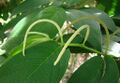 Piper aduncum


Medical Disclaimer: WikiMD is for informational purposes only and is not a substitute for professional medical advice. Content may be inaccurate or outdated and should not be used for diagnosis or treatment. Always consult your healthcare provider for medical decisions. Verify information with trusted sources such as CDC.gov and NIH.gov. By using this site, you agree that WikiMD is not liable for any outcomes related to its content. See full disclaimer.
Credits:Most images are courtesy of Wikimedia commons, and templates, categories Wikipedia, licensed under CC BY SA or similar.
Translate page: - East Asian
中文,
日本,
한국어,
South Asian
हिन्दी,
தமிழ்,
తెలుగు,
Urdu,
ಕನ್ನಡ,
Southeast Asian
Indonesian,
Vietnamese,
Thai,
မြန်မာဘာသာ,
বাংলা
European
español,
Deutsch,
français,
Greek,
português do Brasil,
polski,
română,
русский,
Nederlands,
norsk,
svenska,
suomi,
Italian
Middle Eastern & African
عربى,
Turkish,
Persian,
Hebrew,
Afrikaans,
isiZulu,
Kiswahili,
Other
Bulgarian,
Hungarian,
Czech,
Swedish,
മലയാളം,
मराठी,
ਪੰਜਾਬੀ,
ગુજરાતી,
Portuguese,
Ukrainian

