Picrotoxin
Picrotoxin, also known as cocculin, is a poisonous crystalline plant compound. It was first isolated by the French chemists Pierre François Guillaume Boullay (1777–1869) and Joseph Bienaimé Caventou (1795–1877) in 1812. The name "picrotoxin" is derived from the Greek words "picros" (bitter) and "toxicon" (poison).
Etymology[edit]
The term "picrotoxin" is a compound of two Greek words: "picros", meaning bitter, and "toxicon", meaning poison. This name was given due to the bitter taste and toxic properties of the compound.
Chemical Structure[edit]
Picrotoxin is a complex of two similar chemical compounds: picrotoxinin and picrotin. Picrotoxinin is the most toxic and active component. The chemical formula of picrotoxinin is C15H16O6, and for picrotin it is C15H18O7.
Source[edit]
Picrotoxin is obtained from the fruit of the plant Anamirta cocculus, commonly known as the Cocculus indicus or fish berry. This plant is native to India and other parts of Southeast Asia.
Pharmacology[edit]
Picrotoxin acts as a non-competitive antagonist at GABA_A receptor, a type of ionotropic receptor. It binds to the chloride ion channel pore of this receptor and blocks the action of GABA, a neurotransmitter that normally induces a calming effect in the brain. This blocking action leads to an increase in the excitability of the central nervous system.
Medical Use[edit]
Picrotoxin is used in medicine as a central nervous system stimulant. It is also used as an antidote in barbiturate and benzodiazepine poisoning to counteract the excessive inhibitory effect of these drugs on the central nervous system.
Toxicity[edit]
Picrotoxin is a powerful poison. Ingestion can lead to symptoms such as convulsions, difficulty in breathing, and death due to respiratory failure. The lethal dose for humans is not known, but in mice, the LD50 is around 15 mg/kg.
Related Terms[edit]

This WikiMD article can only be edited by registered and verified editors. You can log in or register.
-
 Picrotoxinin Synthesis
 -
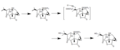 Picrotin Synthesis


Medical Disclaimer: WikiMD is for informational purposes only and is not a substitute for professional medical advice. Content may be inaccurate or outdated and should not be used for diagnosis or treatment. Always consult your healthcare provider for medical decisions. Verify information with trusted sources such as CDC.gov and NIH.gov. By using this site, you agree that WikiMD is not liable for any outcomes related to its content. See full disclaimer.
Credits:Most images are courtesy of Wikimedia commons, and templates, categories Wikipedia, licensed under CC BY SA or similar.
Translate page: - East Asian
中文,
日本,
한국어,
South Asian
हिन्दी,
தமிழ்,
తెలుగు,
Urdu,
ಕನ್ನಡ,
Southeast Asian
Indonesian,
Vietnamese,
Thai,
မြန်မာဘာသာ,
বাংলা
European
español,
Deutsch,
français,
Greek,
português do Brasil,
polski,
română,
русский,
Nederlands,
norsk,
svenska,
suomi,
Italian
Middle Eastern & African
عربى,
Turkish,
Persian,
Hebrew,
Afrikaans,
isiZulu,
Kiswahili,
Other
Bulgarian,
Hungarian,
Czech,
Swedish,
മലയാളം,
मराठी,
ਪੰਜਾਬੀ,
ગુજરાતી,
Portuguese,
Ukrainian

