Photosensitizer
A photosensitizer is a molecule that produces a chemical change in another molecule in a photochemical process. Photosensitizers are commonly used in photodynamic therapy for treating cancer and other diseases. They can also be used in photolithography, photochemistry, and in a variety of other applications.
Mechanism of action[edit]
Photosensitizers work by absorbing light energy and transferring it to other molecules. The energy can be transferred either by a process called energy transfer, in which the energy is transferred directly to the other molecule, or by a process called electron transfer, in which an electron is transferred from the photosensitizer to the other molecule.
In photodynamic therapy, the photosensitizer is administered to the patient and then activated by light of a specific wavelength. The activated photosensitizer then transfers its energy to oxygen molecules, producing reactive oxygen species that can kill cancer cells.
Types of photosensitizers[edit]
There are several types of photosensitizers, including porphyrins, chlorins, and phthalocyanines. Each type has its own unique properties and uses.
Porphyrins[edit]
Porphyrins are a group of organic compounds that are widely used as photosensitizers. They have a complex ring structure that allows them to absorb light in the visible spectrum. Porphyrins are used in photodynamic therapy and in the production of solar cells.
Chlorins[edit]
Chlorins are a type of photosensitizer that are derived from chlorophyll, the molecule that plants use to absorb light for photosynthesis. Chlorins have a similar structure to porphyrins, but they absorb light at longer wavelengths. This makes them particularly useful for photodynamic therapy, as they can penetrate deeper into tissues.
Phthalocyanines[edit]
Phthalocyanines are a type of photosensitizer that are similar to porphyrins and chlorins, but they have a larger ring structure. This allows them to absorb light at even longer wavelengths, making them useful for applications that require deep penetration into tissues.
See also[edit]
References[edit]

This WikiMD article can only be edited by registered and verified editors. You can log in or register.
-
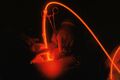 Photodynamic therapy (red)
 -
 Simplified schematic for a photosensitizer affecting a substrate
 -
 Type 1 Photosensitized Reaction
 -
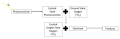 Diagram of a Type II photosensitized reaction
 -
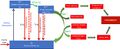 Modified Jablonski diagram showing the mechanism of PDT
 -
 Organometallic photosensors
 -
 Organic photosensitizers
 -
 Dye sensitized solar cell
.jpg)


Medical Disclaimer: WikiMD is for informational purposes only and is not a substitute for professional medical advice. Content may be inaccurate or outdated and should not be used for diagnosis or treatment. Always consult your healthcare provider for medical decisions. Verify information with trusted sources such as CDC.gov and NIH.gov. By using this site, you agree that WikiMD is not liable for any outcomes related to its content. See full disclaimer.
Credits:Most images are courtesy of Wikimedia commons, and templates, categories Wikipedia, licensed under CC BY SA or similar.
Translate page: - East Asian
中文,
日本,
한국어,
South Asian
हिन्दी,
தமிழ்,
తెలుగు,
Urdu,
ಕನ್ನಡ,
Southeast Asian
Indonesian,
Vietnamese,
Thai,
မြန်မာဘာသာ,
বাংলা
European
español,
Deutsch,
français,
Greek,
português do Brasil,
polski,
română,
русский,
Nederlands,
norsk,
svenska,
suomi,
Italian
Middle Eastern & African
عربى,
Turkish,
Persian,
Hebrew,
Afrikaans,
isiZulu,
Kiswahili,
Other
Bulgarian,
Hungarian,
Czech,
Swedish,
മലയാളം,
मराठी,
ਪੰਜਾਬੀ,
ગુજરાતી,
Portuguese,
Ukrainian

