Phalen maneuver
Phalen's maneuver or Phalen's test is a diagnostic test used in the field of medicine to identify carpal tunnel syndrome (CTS). The test was named after the American orthopedic surgeon, George S. Phalen.
Procedure[edit]
The Phalen's maneuver is performed by having the patient flex their wrists and press the backs of their hands against each other for about 60 seconds. This position will compress the median nerve in the carpal tunnel. If the patient experiences tingling, numbness, or pain in the fingers within 60 seconds, the test is considered positive for carpal tunnel syndrome.
Accuracy[edit]
The accuracy of Phalen's maneuver in diagnosing carpal tunnel syndrome varies among studies. Some studies suggest that it has a sensitivity ranging from 51% to 91% and a specificity ranging from 33% to 86%. This means that while the test can be useful in diagnosing CTS, it may also produce false positives and negatives.
Comparison with other tests[edit]
Phalen's maneuver is often compared with Tinel's sign, another test used to diagnose carpal tunnel syndrome. Some studies suggest that Phalen's maneuver is more accurate than Tinel's sign, while others suggest the opposite. Both tests are commonly used in clinical practice.
See also[edit]
References[edit]

This WikiMD article can only be edited by registered and verified editors. You can log in or register.
-
 Phalen's Maneuver
 -
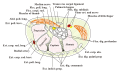 Carpal Tunnel Diagram
 -
 Reverse Phalen's Maneuver


Medical Disclaimer: WikiMD is for informational purposes only and is not a substitute for professional medical advice. Content may be inaccurate or outdated and should not be used for diagnosis or treatment. Always consult your healthcare provider for medical decisions. Verify information with trusted sources such as CDC.gov and NIH.gov. By using this site, you agree that WikiMD is not liable for any outcomes related to its content. See full disclaimer.
Credits:Most images are courtesy of Wikimedia commons, and templates, categories Wikipedia, licensed under CC BY SA or similar.
Translate page: - East Asian
中文,
日本,
한국어,
South Asian
हिन्दी,
தமிழ்,
తెలుగు,
Urdu,
ಕನ್ನಡ,
Southeast Asian
Indonesian,
Vietnamese,
Thai,
မြန်မာဘာသာ,
বাংলা
European
español,
Deutsch,
français,
Greek,
português do Brasil,
polski,
română,
русский,
Nederlands,
norsk,
svenska,
suomi,
Italian
Middle Eastern & African
عربى,
Turkish,
Persian,
Hebrew,
Afrikaans,
isiZulu,
Kiswahili,
Other
Bulgarian,
Hungarian,
Czech,
Swedish,
മലയാളം,
मराठी,
ਪੰਜਾਬੀ,
ગુજરાતી,
Portuguese,
Ukrainian

