Pensky–Martens closed-cup test
Pensky–Martens closed-cup test is a method used to determine the flash point of a liquid. The flash point is the lowest temperature at which the vapors of a volatile material will ignite, when given an ignition source. This test is crucial in assessing the flammability and safety aspects of liquids, especially in the chemical, fuel, and pharmaceutical industries. The Pensky–Martens closed-cup test is widely recognized and utilized due to its accuracy and reliability in measuring flash points under controlled conditions.
Overview[edit]
The test is conducted in a closed chamber, known as the Pensky–Martens closed cup, where a small sample of the liquid under test is placed. The chamber is then gradually heated, and an ignition source is periodically introduced to the vapor space above the liquid. The temperature at which a flash is observed is recorded as the flash point. This method minimizes the loss of the volatile compounds during the test, providing a more accurate measurement compared to open cup methods.
Procedure[edit]
The procedure for the Pensky–Martens closed-cup test is standardized and follows specific steps to ensure consistency and safety:
- A sample of the liquid is placed in the test cup, which is then sealed with a lid.
- The sample is heated at a controlled rate, and the temperature is carefully monitored.
- An ignition source is intermittently introduced into the cup to test for a flash.
- The temperature at which a flash occurs is noted as the flash point of the substance.
Applications[edit]
The Pensky–Martens closed-cup test is used in various industries for safety and quality control purposes. It helps in classifying liquids according to their flammability, which is essential for storage, handling, and transportation regulations. In the petroleum industry, it is used to assess the safety aspects of fuels and oil-based products. The chemical industry utilizes this test to evaluate the flammability risks of solvents and other chemical compounds. Additionally, the pharmaceutical industry applies this method to ensure the safety of volatile substances used in drug formulation.
Regulations and Standards[edit]
The test is governed by international standards to ensure uniformity and accuracy. The most commonly referenced standards are:
- ASTM D93 - Standard Test Methods for Flash Point by Pensky-Martens Closed Cup Tester
- ISO 2719 - Determination of flash point - Pensky-Martens closed cup method
These standards provide detailed guidelines on the equipment, procedure, and safety measures to be followed during the test.
Safety Considerations[edit]
Due to the nature of the test, safety precautions are paramount to prevent accidents. Proper ventilation, use of personal protective equipment (PPE), and adherence to standard operating procedures are essential. The test should only be conducted using calibrated equipment and by trained personnel.
See Also[edit]

-
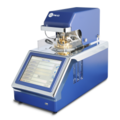 Automatic Pensky-Martens closed cup tester with integrated fire extinguisher
Ad. Transform your health with W8MD Weight Loss, Sleep & MedSpa

Tired of being overweight?
Special offer:
Budget GLP-1 weight loss medications
- Semaglutide starting from $29.99/week and up with insurance for visit of $59.99 and up per week self pay.
- Tirzepatide starting from $45.00/week and up (dose dependent) or $69.99/week and up self pay
✔ Same-week appointments, evenings & weekends
Learn more:
- GLP-1 weight loss clinic NYC
- W8MD's NYC medical weight loss
- W8MD Philadelphia GLP-1 shots
- Philadelphia GLP-1 injections
- Affordable GLP-1 shots NYC
|
WikiMD Medical Encyclopedia |
Medical Disclaimer: WikiMD is for informational purposes only and is not a substitute for professional medical advice. Content may be inaccurate or outdated and should not be used for diagnosis or treatment. Always consult your healthcare provider for medical decisions. Verify information with trusted sources such as CDC.gov and NIH.gov. By using this site, you agree that WikiMD is not liable for any outcomes related to its content. See full disclaimer.
Credits:Most images are courtesy of Wikimedia commons, and templates, categories Wikipedia, licensed under CC BY SA or similar.
Translate this page: - East Asian
中文,
日本,
한국어,
South Asian
हिन्दी,
தமிழ்,
తెలుగు,
Urdu,
ಕನ್ನಡ,
Southeast Asian
Indonesian,
Vietnamese,
Thai,
မြန်မာဘာသာ,
বাংলা
European
español,
Deutsch,
français,
Greek,
português do Brasil,
polski,
română,
русский,
Nederlands,
norsk,
svenska,
suomi,
Italian
Middle Eastern & African
عربى,
Turkish,
Persian,
Hebrew,
Afrikaans,
isiZulu,
Kiswahili,
Other
Bulgarian,
Hungarian,
Czech,
Swedish,
മലയാളം,
मराठी,
ਪੰਜਾਬੀ,
ગુજરાતી,
Portuguese,
Ukrainian
