Pelvimetry
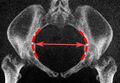
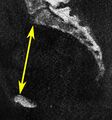
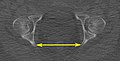
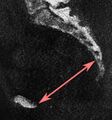
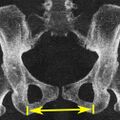
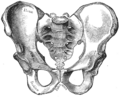
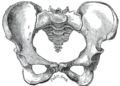
Pelvimetry is the measurement of the female pelvis. It can be performed clinically or radiologically. The dimensions of the pelvis can be of clinical significance in childbirth.
Clinical pelvimetry[edit]
Clinical pelvimetry involves the measurement of the female pelvis manually. The measurements are taken by a healthcare professional during a physical examination. The dimensions of the pelvis are assessed to determine if it is of adequate size for childbirth.
Radiological pelvimetry[edit]
Radiological pelvimetry involves the use of imaging techniques to measure the dimensions of the female pelvis. This can include the use of X-rays, CT scans, or MRI. Radiological pelvimetry is less commonly used than clinical pelvimetry due to the potential risks associated with radiation exposure.
Indications[edit]
Pelvimetry is typically performed in women who are pregnant or planning to become pregnant. It can be used to assess the likelihood of a successful vaginal birth, or to identify potential risks associated with childbirth.
See also[edit]
References[edit]

This WikiMD article can only be edited by registered and verified editors. You can log in or register.
-
 Pelvimetry
 -
 Pelvimetry
 -
 Pelvimetry
 -
 Pelvimetry
 -
 Pelvimetry
 -
 Pelvimetry
 -
 Pelvimetry
 -
 Pelvimetry
 -
 Pelvimetry
 -
 Pelvimetry
 -
 Pelvimetry


Advertise on WikiMD — 81,000+ full articles, ~900,000 total pages, ~250 million page views. Global reach, limited time promotional rates from $1/page/day. Learn more · View stats


Translate page: - East Asian
中文,
日本,
한국어,
South Asian
हिन्दी,
தமிழ்,
తెలుగు,
Urdu,
ಕನ್ನಡ,
Southeast Asian
Indonesian,
Vietnamese,
Thai,
မြန်မာဘာသာ,
বাংলা
European
español,
Deutsch,
français,
Greek,
português do Brasil,
polski,
română,
русский,
Nederlands,
norsk,
svenska,
suomi,
Italian
Middle Eastern & African
عربى,
Turkish,
Persian,
Hebrew,
Afrikaans,
isiZulu,
Kiswahili,
Other
Bulgarian,
Hungarian,
Czech,
Swedish,
മലയാളം,
मराठी,
ਪੰਜਾਬੀ,
ગુજરાતી,
Portuguese,
Ukrainian
About WikiMD • Contact • Disclaimer • Privacy • Copyright • Site statistics
Some content and images may originate from Wikimedia Commons or Wikipedia and remain subject to their stated licenses. Unless otherwise noted, eligible WikiMD content is available under CC BY-SA 4.0.
WikiMD Wellnesspedia — Free health & wellness information for patients, students, and health professionals.

