Panicum virgatum
Panicum virgatum, commonly known as switchgrass, is a perennial warm season bunchgrass native to North America, where it occurs naturally from 55°N latitude in Canada southwards into the United States and Mexico. It is a key species in the Tallgrass prairie ecosystem.
Description[edit]
Panicum virgatum grows in a variety of open habitats, including prairies, savannas, and the edges of woodlands. It is a hardy plant that can survive in a range of conditions, including poor soils and drought conditions. The plant typically reaches heights of 1–2 meters, but can grow as tall as 3 meters in optimal conditions. It has a deep root system, which contributes to its resilience and also makes it useful for soil conservation.
Uses[edit]
Switchgrass has been used for a variety of purposes throughout history. Native Americans used it for thatching their roofs and making mats and baskets. Today, it is often used for forage and can be grazed by livestock or harvested as hay.
In recent years, switchgrass has gained attention as a potential source of biofuel. Its high yield and ability to grow on marginal lands make it an attractive option for sustainable energy production.
Cultivation[edit]
Switchgrass is relatively easy to cultivate. It can be grown from seed, which is typically sown in the spring. The plant prefers full sun, but can tolerate some shade. It is adaptable to a range of soil types, but prefers well-drained soil.
Ecology[edit]
Switchgrass plays an important role in its ecosystem. It provides habitat for a variety of wildlife, including birds and insects. Its deep roots help to prevent soil erosion and improve soil health.
See also[edit]
 | This Poaceae article is a stub. You can help WikiMD by expanding the page. |
Panicum_virgatum[edit]
-
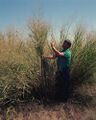 Panicum virgatum plant
 -
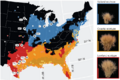 Different ecotypes of Panicum virgatum
 -
 Heavy metal switch grass in Minnesota, 2007
 -
 Panicum virgatum


Medical Disclaimer: WikiMD is for informational purposes only and is not a substitute for professional medical advice. Content may be inaccurate or outdated and should not be used for diagnosis or treatment. Always consult your healthcare provider for medical decisions. Verify information with trusted sources such as CDC.gov and NIH.gov. By using this site, you agree that WikiMD is not liable for any outcomes related to its content. See full disclaimer.
Credits:Most images are courtesy of Wikimedia commons, and templates, categories Wikipedia, licensed under CC BY SA or similar.
Translate page: - East Asian
中文,
日本,
한국어,
South Asian
हिन्दी,
தமிழ்,
తెలుగు,
Urdu,
ಕನ್ನಡ,
Southeast Asian
Indonesian,
Vietnamese,
Thai,
မြန်မာဘာသာ,
বাংলা
European
español,
Deutsch,
français,
Greek,
português do Brasil,
polski,
română,
русский,
Nederlands,
norsk,
svenska,
suomi,
Italian
Middle Eastern & African
عربى,
Turkish,
Persian,
Hebrew,
Afrikaans,
isiZulu,
Kiswahili,
Other
Bulgarian,
Hungarian,
Czech,
Swedish,
മലയാളം,
मराठी,
ਪੰਜਾਬੀ,
ગુજરાતી,
Portuguese,
Ukrainian

