Polymerase chain reaction
Polymerase Chain Reaction (PCR) is a widely used laboratory technique in molecular biology to amplify a single copy or a few copies of a segment of DNA across several orders of magnitude, generating thousands to millions of copies of a particular DNA sequence. Developed in 1983 by Kary Mullis, PCR is now a common and often indispensable technique used in medical and biological research labs for a variety of applications.
Overview[edit]
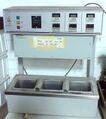
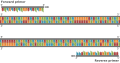
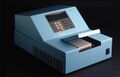
PCR enables the selective amplification of a specific region of DNA from a complex pool of DNA. The process relies on thermal cycling, consisting of cycles of repeated heating and cooling of the reaction for DNA melting and enzymatic replication of the DNA. Primers (short DNA fragments) containing sequences complementary to the target region along with a DNA polymerase (after which the method is named) are key components to enable selective and repetitive amplification.
Process[edit]
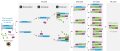
The PCR process generally involves several key steps:
- Denaturation: The double-stranded DNA is heated to a high temperature to separate it into two single strands.
- Annealing: Temperature is lowered to enable the DNA primers to attach to the template DNA.
- Extension: DNA polymerase synthesizes a new DNA strand complementary to the DNA template strand by adding dNTPs (deoxynucleoside triphosphates) in a sequence dictated by the DNA template and primers.
This cycle is typically repeated 25-35 times to produce the required quantity of DNA.
Applications[edit]
PCR has a broad range of applications including:
- Genetic testing: Identifying genetic disorders from small samples of DNA.
- Forensic science: Amplifying DNA from crime scene evidence.
- Infectious disease: Detecting the presence of pathogen DNA in blood or tissues.
- Research: Cloning DNA sequences and generating probes for Southern blotting.
Variations[edit]
Several variations of PCR exist, including:
- Real-Time PCR or Quantitative PCR (qPCR): Allows quantitative measurement of DNA.
- Reverse Transcription PCR (RT-PCR): Used for amplifying DNA from RNA.
- Multiplex PCR: Allows amplification of multiple targets in a single PCR setup.
Challenges and Limitations[edit]
While PCR is a powerful and versatile tool, it is not without limitations. These include the potential for contamination leading to false results, the need for precise thermal cycling, and limitations in the size of DNA that can be amplified.
See Also[edit]
 | This medical article is a stub. You can help WikiMD by expanding the page. |
-
Polymerase chain reaction
-
Polymerase chain reaction
-
 Polymerase chain reaction
 -
 Polymerase chain reaction
 -
Polymerase chain reaction
-
Polymerase chain reaction
-
Polymerase chain reaction
-
Polymerase chain reaction
-
Polymerase chain reaction
-
 Polymerase chain reaction
 -
 Polymerase chain reaction


,_c_1986._(9663810586).jpg)
Sponsored Health Resource

W8MD Weight Loss, Sleep & MedSpa
Looking for physician-supervised weight loss, semaglutide, tirzepatide, or GLP-1 receptor agonist options? W8MD helps eligible patients in New York City, Brooklyn, New Jersey, Connecticut, Pennsylvania, Delaware, and greater Philadelphia with medical weight loss, sleep medicine, and long-term maintenance support.
GLP-1 specials: Affordable GLP-1 injections NYC and Philadelphia starting from $29.99/week and up for semaglutide with insurance accepted for qualifying visits, and $45/week and up for tirzepatide with insurance accepted for qualifying visits. Self-pay options start from $59.99/week and up for semaglutide and $69.99/week and up for tirzepatide.
Medical weight loss NYC | Affordable GLP-1 injections NYC | Budget GLP-1 weight loss shots Philadelphia | New Jersey medical weight loss | NYC medical weight loss | Philadelphia medical weight loss | Sleep clinic NYC | W8MD's Philadelphia GLP-1 doctor | Weight loss prescriptions NYC
Book a W8MD appointment · View GLP-1 specials
Paid promotional message. Eligibility, pricing, insurance coverage, medication availability, and results vary. Medical evaluation required.

Medical Disclaimer: WikiMD is for informational purposes only and is not a substitute for professional medical advice. Content may be inaccurate or outdated and should not be used for diagnosis or treatment. Always consult your healthcare provider for medical decisions. Verify information with trusted sources such as CDC.gov and NIH.gov. By using this site, you agree that WikiMD is not liable for any outcomes related to its content. See full disclaimer.
Credits:Most images are courtesy of Wikimedia commons, and templates, categories Wikipedia, licensed under CC BY SA or similar.
Translate page: - East Asian
中文,
日本,
한국어,
South Asian
हिन्दी,
தமிழ்,
తెలుగు,
Urdu,
ಕನ್ನಡ,
Southeast Asian
Indonesian,
Vietnamese,
Thai,
မြန်မာဘာသာ,
বাংলা
European
español,
Deutsch,
français,
Greek,
português do Brasil,
polski,
română,
русский,
Nederlands,
norsk,
svenska,
suomi,
Italian
Middle Eastern & African
عربى,
Turkish,
Persian,
Hebrew,
Afrikaans,
isiZulu,
Kiswahili,
Other
Bulgarian,
Hungarian,
Czech,
Swedish,
മലയാളം,
मराठी,
ਪੰਜਾਬੀ,
ગુજરાતી,
Portuguese,
Ukrainian


