Ovarian mucinous tumor
Ovarian mucinous tumors are a subtype of epithelial ovarian cancer, which is a broad category of ovarian cancers arising from the epithelium (outer layer) of the ovary. These tumors are characterized by the production of mucus-like fluid by the tumor cells, which is a distinguishing feature from other types of ovarian tumors. Ovarian mucinous tumors can be benign, borderline, or malignant, with the potential to spread to other parts of the body if not treated promptly.
Classification[edit]
Ovarian mucinous tumors are classified based on their potential to become cancerous:
- Benign - These tumors are non-cancerous and do not spread to other parts of the body. They are often encapsulated, making surgical removal easier.
- Borderline (also known as atypical proliferative mucinous tumor) - These tumors have a low potential to become cancerous and spread. They exhibit more cellular activity than benign tumors but lack the invasive properties of malignant tumors.
- Malignant - Malignant mucinous tumors are cancerous and can spread to other parts of the body. They require more aggressive treatment compared to benign and borderline tumors.
Symptoms[edit]
Symptoms of ovarian mucinous tumors may include:
- Abdominal bloating or swelling
- Pelvic pain
- Changes in bowel habits, such as constipation
- Frequent urination
- Feeling full quickly after eating
It's important to note that these symptoms can also be associated with a variety of other conditions, making early diagnosis challenging.
Diagnosis[edit]
Diagnosis of ovarian mucinous tumors typically involves a combination of:
- Pelvic examination - To detect any abnormalities in the ovaries or other parts of the reproductive system.
- Ultrasound - To visualize the ovaries and identify the presence of tumors.
- CA-125 blood test - While not specific to mucinous tumors, this test can help in diagnosing ovarian cancer.
- CT scan or MRI - To provide detailed images of the ovaries and surrounding structures, helping to determine the extent of the disease.
- Biopsy - The definitive diagnosis is made by examining tissue samples under a microscope.
Treatment[edit]
Treatment options for ovarian mucinous tumors depend on the stage and grade of the tumor, as well as the overall health of the patient. Options may include:
- Surgery - The primary treatment for ovarian mucinous tumors, aiming to remove the tumor and any affected tissue.
- Chemotherapy - May be used after surgery to kill any remaining cancer cells, especially in cases of malignant tumors.
- Radiation therapy - Less commonly used for ovarian mucinous tumors, but may be considered in specific cases.
Prognosis[edit]
The prognosis for ovarian mucinous tumors varies depending on the type (benign, borderline, or malignant) and stage at diagnosis. Benign tumors generally have an excellent prognosis following surgical removal. Borderline tumors have a good prognosis, though they require careful monitoring for any signs of progression. Malignant mucinous tumors have a more variable prognosis, depending on the extent of the disease and response to treatment.
Prevention[edit]
There are no specific measures to prevent ovarian mucinous tumors. However, regular pelvic examinations and awareness of the symptoms can aid in early detection and treatment.
 | This medical article is a stub. You can help WikiMD by expanding the page. |
Ovarian_mucinous_tumor[edit]
-
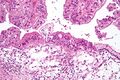 Ovarian mucinous tumor
 -
Proliferating Mucinous Tumor of the Ovary

Sponsored Health Resource

W8MD Weight Loss, Sleep & MedSpa
Looking for physician-supervised weight loss, semaglutide, tirzepatide, or GLP-1 receptor agonist options? W8MD helps eligible patients in New York City, Brooklyn, New Jersey, Connecticut, Pennsylvania, Delaware, and greater Philadelphia with medical weight loss, sleep medicine, and long-term maintenance support.
GLP-1 specials: Affordable GLP-1 injections NYC and Philadelphia starting from $29.99/week and up for semaglutide with insurance accepted for qualifying visits, and $45/week and up for tirzepatide with insurance accepted for qualifying visits. Self-pay options start from $59.99/week and up for semaglutide and $69.99/week and up for tirzepatide.
Medical weight loss NYC | Affordable GLP-1 injections NYC | Budget GLP-1 weight loss shots Philadelphia | New Jersey medical weight loss | NYC medical weight loss | Philadelphia medical weight loss | Sleep clinic NYC | W8MD's Philadelphia GLP-1 doctor | Weight loss prescriptions NYC
Book a W8MD appointment · View GLP-1 specials
Paid promotional message. Eligibility, pricing, insurance coverage, medication availability, and results vary. Medical evaluation required.

Medical Disclaimer: WikiMD is for informational purposes only and is not a substitute for professional medical advice. Content may be inaccurate or outdated and should not be used for diagnosis or treatment. Always consult your healthcare provider for medical decisions. Verify information with trusted sources such as CDC.gov and NIH.gov. By using this site, you agree that WikiMD is not liable for any outcomes related to its content. See full disclaimer.
Credits:Most images are courtesy of Wikimedia commons, and templates, categories Wikipedia, licensed under CC BY SA or similar.
Translate page: - East Asian
中文,
日本,
한국어,
South Asian
हिन्दी,
தமிழ்,
తెలుగు,
Urdu,
ಕನ್ನಡ,
Southeast Asian
Indonesian,
Vietnamese,
Thai,
မြန်မာဘာသာ,
বাংলা
European
español,
Deutsch,
français,
Greek,
português do Brasil,
polski,
română,
русский,
Nederlands,
norsk,
svenska,
suomi,
Italian
Middle Eastern & African
عربى,
Turkish,
Persian,
Hebrew,
Afrikaans,
isiZulu,
Kiswahili,
Other
Bulgarian,
Hungarian,
Czech,
Swedish,
മലയാളം,
मराठी,
ਪੰਜਾਬੀ,
ગુજરાતી,
Portuguese,
Ukrainian


.jpg)