Orthodontic technology
Orthodontic technology is a specialized area of dentistry that focuses on the design and application of corrective and supportive devices for the treatment of malocclusions and other dental anomalies. This field is integral to the practice of orthodontics, a dental specialty concerned with the diagnosis, prevention, and correction of malpositioned teeth and jaws.
History[edit]
The history of orthodontic technology dates back to the ancient times, with evidence of orthodontic-like appliances found in the tombs of Egyptian mummies. However, the modern field of orthodontics did not begin to take shape until the 18th century with the work of Pierre Fauchard, often referred to as the "father of modern dentistry".
Orthodontic Appliances[edit]
Orthodontic technology primarily involves the creation and management of orthodontic appliances. These include:
- Dental braces: Devices used in orthodontics that align and straighten teeth and help position them with regard to a person's bite, while also aiming to improve dental health.
- Retainers: Custom-made devices, usually made of wires or clear plastic, that hold teeth in position after surgery or any method of realigning teeth.
- Headgear: This appliance applies force to the teeth and jaws to guide the direction of tooth movement and jaw growth.
Orthodontic Technologists[edit]
Orthodontic technologists, also known as dental technologists, are professionals who are trained to fabricate dental appliances to the prescription of a clinical dental technician, dentist, or orthodontist. They play a crucial role in the treatment process, working closely with the orthodontist to design and construct custom appliances for each patient.
Education and Training[edit]
Education and training for orthodontic technologists typically involves a combination of academic coursework and hands-on training. Many technologists earn a degree in dental technology or a related field, and then complete additional training in orthodontic technology.
Future of Orthodontic Technology[edit]
The future of orthodontic technology is promising, with advances in digital technology paving the way for more precise and efficient treatments. Innovations such as 3D printing and CAD/CAM technology are revolutionizing the field, allowing for the creation of custom appliances with unprecedented accuracy.
 | This dentistry article is a stub. You can help WikiMD by expanding the page. |
 | This medical article is a stub. You can help WikiMD by expanding the page. |
Orthodontic technology[edit]
-
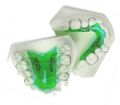 Upper and Lower Jaw Functional Expanders
 -
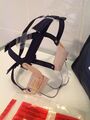 Full orthodontic headgear with headcap and fitting straps
 -
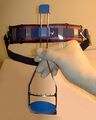 Headgear - Reverse Pull


Medical Disclaimer: WikiMD is for informational purposes only and is not a substitute for professional medical advice. Content may be inaccurate or outdated and should not be used for diagnosis or treatment. Always consult your healthcare provider for medical decisions. Verify information with trusted sources such as CDC.gov and NIH.gov. By using this site, you agree that WikiMD is not liable for any outcomes related to its content. See full disclaimer.
Credits:Most images are courtesy of Wikimedia commons, and templates, categories Wikipedia, licensed under CC BY SA or similar.
Translate page: - East Asian
中文,
日本,
한국어,
South Asian
हिन्दी,
தமிழ்,
తెలుగు,
Urdu,
ಕನ್ನಡ,
Southeast Asian
Indonesian,
Vietnamese,
Thai,
မြန်မာဘာသာ,
বাংলা
European
español,
Deutsch,
français,
Greek,
português do Brasil,
polski,
română,
русский,
Nederlands,
norsk,
svenska,
suomi,
Italian
Middle Eastern & African
عربى,
Turkish,
Persian,
Hebrew,
Afrikaans,
isiZulu,
Kiswahili,
Other
Bulgarian,
Hungarian,
Czech,
Swedish,
മലയാളം,
मराठी,
ਪੰਜਾਬੀ,
ગુજરાતી,
Portuguese,
Ukrainian

