Orangutan
Orangutans are great apes native to Indonesia and Malaysia. They are found in the rainforests of Borneo and Sumatra, but their populations are rapidly decreasing due to deforestation and human activities.
Taxonomy and phylogeny[edit]
Orangutans are the only surviving species of the subfamily Ponginae, which also included several other species, such as the three extinct species of the genus Pongo. The ancestors of the Ponginae subfamily split from the main ape line in Africa 16 to 19 million years ago (mya) and spread into Asia.
Anatomy and physiology[edit]
Orangutans are the most arboreal of the great apes, spending nearly all their time in the trees. Every night they fashion sleeping nests from branches and foliage. They are more solitary than other apes; males and females generally come together only to mate.
Behavior and ecology[edit]
Orangutans are among the most intelligent primates. They use a variety of sophisticated tools and construct elaborate sleeping nests each night from branches and foliage. The apes have been extensively studied for their learning abilities. There may even be distinctive cultures within populations.
Conservation[edit]
Orangutans are currently only found in the rainforests of Borneo and Sumatra. Classified in the genus Pongo, orangutans were originally considered to be one species. However, since 1996, they have been divided into two species: the Bornean orangutan (P. pygmaeus) and the Sumatran orangutan (P. abelii).
See also[edit]
References[edit]
External links[edit]

This WikiMD article can only be edited by registered and verified editors. You can log in or register.
Orangutan[edit]
-
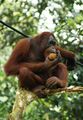 Orang Utan, Semenggok Forest Reserve, Sarawak, Borneo, Malaysia
 -
Bornean, Sumatran & Tapanuli orangs
-
Sivapithecus sivalensis
-
Pongo tapanuliensis male female
-
Orang-Utan Tournai
-
Video wild orangutan Borneo
-
Orangutan - Zoologischer Garten Berlin
-
Leuser orangs
-
Male Bornean Orangutan - Big Cheeks
-
Here's Looking At You, Kid
-
Bukit Lawang, orangutans
-
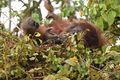 Bornean Orangutan in nest


Medical Disclaimer: WikiMD is for informational purposes only and is not a substitute for professional medical advice. Content may be inaccurate or outdated and should not be used for diagnosis or treatment. Always consult your healthcare provider for medical decisions. Verify information with trusted sources such as CDC.gov and NIH.gov. By using this site, you agree that WikiMD is not liable for any outcomes related to its content. See full disclaimer.
Credits:Most images are courtesy of Wikimedia commons, and templates, categories Wikipedia, licensed under CC BY SA or similar.
Translate page: - East Asian
中文,
日本,
한국어,
South Asian
हिन्दी,
தமிழ்,
తెలుగు,
Urdu,
ಕನ್ನಡ,
Southeast Asian
Indonesian,
Vietnamese,
Thai,
မြန်မာဘာသာ,
বাংলা
European
español,
Deutsch,
français,
Greek,
português do Brasil,
polski,
română,
русский,
Nederlands,
norsk,
svenska,
suomi,
Italian
Middle Eastern & African
عربى,
Turkish,
Persian,
Hebrew,
Afrikaans,
isiZulu,
Kiswahili,
Other
Bulgarian,
Hungarian,
Czech,
Swedish,
മലയാളം,
मराठी,
ਪੰਜਾਬੀ,
ગુજરાતી,
Portuguese,
Ukrainian


.jpg)


.jpg)
.jpg)