Optochin
Optochin (or ethylhydrocupreine hydrochloride) is a chemical compound often used in laboratory settings. It is a derivative of quinine, a natural substance found in the bark of the Cinchona tree. Optochin is primarily used as a selective agent in the isolation and identification of Streptococcus pneumoniae, a bacterium that can cause serious infections in humans.
History[edit]
Optochin was first synthesized in the early 20th century. It was initially used as an antimalarial drug, similar to its parent compound quinine. However, its use in this capacity was limited due to its toxicity. In the 1920s, researchers discovered that optochin had a selective inhibitory effect on Streptococcus pneumoniae, leading to its use in microbiology labs.
Use in Microbiology[edit]
In the laboratory, optochin is used in agar plates to isolate Streptococcus pneumoniae. When these bacteria are exposed to optochin, they are unable to grow. This allows for the easy identification and isolation of the bacteria. The optochin sensitivity test is a standard part of the identification process for Streptococcus pneumoniae.
Mechanism of Action[edit]
Optochin works by disrupting the function of the bacteria's cell membrane. This causes the bacteria to lose its ability to maintain homeostasis, leading to cell death. The exact mechanism of how optochin disrupts the cell membrane is not fully understood.
Safety and Toxicity[edit]
While optochin is useful in the laboratory, it is not used in medical treatment due to its toxicity. It can cause a variety of side effects, including nausea, vomiting, and abdominal pain. In severe cases, it can cause cardiac arrhythmias and respiratory failure.
See Also[edit]


This WikiMD article can only be edited by registered and verified editors. You can log in or register.
Optochin gallery[edit]
-
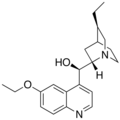 Optochin

Sponsored Health Resource

W8MD Weight Loss, Sleep & MedSpa
Looking for physician-supervised weight loss, semaglutide, tirzepatide, or GLP-1 receptor agonist options? W8MD helps eligible patients in New York City, Brooklyn, New Jersey, Connecticut, Pennsylvania, Delaware, and greater Philadelphia with medical weight loss, sleep medicine, and long-term maintenance support.
GLP-1 specials: Affordable GLP-1 injections NYC and Philadelphia starting from $29.99/week and up for semaglutide with insurance accepted for qualifying visits, and $45/week and up for tirzepatide with insurance accepted for qualifying visits. Self-pay options start from $59.99/week and up for semaglutide and $69.99/week and up for tirzepatide.
Medical weight loss NYC | Affordable GLP-1 injections NYC | Budget GLP-1 weight loss shots Philadelphia | New Jersey medical weight loss | NYC medical weight loss | Philadelphia medical weight loss | Sleep clinic NYC | W8MD's Philadelphia GLP-1 doctor | Weight loss prescriptions NYC
Book a W8MD appointment · View GLP-1 specials
Paid promotional message. Eligibility, pricing, insurance coverage, medication availability, and results vary. Medical evaluation required.

Medical Disclaimer: WikiMD is for informational purposes only and is not a substitute for professional medical advice. Content may be inaccurate or outdated and should not be used for diagnosis or treatment. Always consult your healthcare provider for medical decisions. Verify information with trusted sources such as CDC.gov and NIH.gov. By using this site, you agree that WikiMD is not liable for any outcomes related to its content. See full disclaimer.
Credits:Most images are courtesy of Wikimedia commons, and templates, categories Wikipedia, licensed under CC BY SA or similar.
Translate page: - East Asian
中文,
日本,
한국어,
South Asian
हिन्दी,
தமிழ்,
తెలుగు,
Urdu,
ಕನ್ನಡ,
Southeast Asian
Indonesian,
Vietnamese,
Thai,
မြန်မာဘာသာ,
বাংলা
European
español,
Deutsch,
français,
Greek,
português do Brasil,
polski,
română,
русский,
Nederlands,
norsk,
svenska,
suomi,
Italian
Middle Eastern & African
عربى,
Turkish,
Persian,
Hebrew,
Afrikaans,
isiZulu,
Kiswahili,
Other
Bulgarian,
Hungarian,
Czech,
Swedish,
മലയാളം,
मराठी,
ਪੰਜਾਬੀ,
ગુજરાતી,
Portuguese,
Ukrainian

