Nuclear reprocessing
Nuclear reprocessing is a series of chemical operations that separates useful nuclear fuel from spent nuclear fuel. This process is a key component of the nuclear fuel cycle and is used to extract valuable elements from nuclear waste and convert them into a form that can be further used for energy production.
History[edit]
The concept of nuclear reprocessing was first introduced in the mid-20th century, during the development of nuclear weapons. The United States and the Soviet Union both developed reprocessing technologies to extract plutonium from spent nuclear fuel for use in weapons. Over time, the focus of reprocessing shifted from weapons production to energy production, with countries like France and Japan investing heavily in reprocessing technologies to maximize the use of their nuclear fuel resources.
Process[edit]
Nuclear reprocessing involves several steps. The first step is the mechanical chopping of the spent fuel, which is then dissolved in nitric acid. This creates a strong acidic solution that can be further processed. The next step is the separation of uranium and plutonium from the fission products and minor actinides. This is typically done using a method known as PUREX (Plutonium Uranium Reduction EXtraction).
The separated uranium and plutonium can then be further processed to create Mixed Oxide Fuel (MOX), which can be used in thermal reactors. The remaining waste, which contains the fission products and minor actinides, is then conditioned for disposal.
Environmental and Safety Concerns[edit]
While nuclear reprocessing can help to maximize the use of nuclear fuel and reduce the volume of high-level waste, it also presents several environmental and safety concerns. These include the potential for nuclear proliferation, the risk of accidents during the reprocessing operations, and the challenge of managing the long-lived radioactive waste produced by the process.
Future of Nuclear Reprocessing[edit]
The future of nuclear reprocessing is uncertain. While some countries, like France and Japan, continue to invest in reprocessing technologies, others, like the United States, have moved away from reprocessing due to cost and proliferation concerns. However, with the increasing demand for clean energy, nuclear reprocessing may play a key role in the future of nuclear power.
 | This article about energy, its collection, its distribution, or its uses is a stub. You can help WikiMD by expanding the page. |
This nuclear technology related article is a stub. You can help WikiMD by expanding it.
-
 Aerial view of Sellafield, Cumbria
 -
 Uranium reprocessing facility
 -
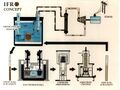 Integral Fast Reactor concept
 -
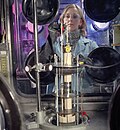 Electrorefining technology
 -
 Fission yield of volatile elements


Medical Disclaimer: WikiMD is for informational purposes only and is not a substitute for professional medical advice. Content may be inaccurate or outdated and should not be used for diagnosis or treatment. Always consult your healthcare provider for medical decisions. Verify information with trusted sources such as CDC.gov and NIH.gov. By using this site, you agree that WikiMD is not liable for any outcomes related to its content. See full disclaimer.
Credits:Most images are courtesy of Wikimedia commons, and templates, categories Wikipedia, licensed under CC BY SA or similar.
Translate page: - East Asian
中文,
日本,
한국어,
South Asian
हिन्दी,
தமிழ்,
తెలుగు,
Urdu,
ಕನ್ನಡ,
Southeast Asian
Indonesian,
Vietnamese,
Thai,
မြန်မာဘာသာ,
বাংলা
European
español,
Deutsch,
français,
Greek,
português do Brasil,
polski,
română,
русский,
Nederlands,
norsk,
svenska,
suomi,
Italian
Middle Eastern & African
عربى,
Turkish,
Persian,
Hebrew,
Afrikaans,
isiZulu,
Kiswahili,
Other
Bulgarian,
Hungarian,
Czech,
Swedish,
മലയാളം,
मराठी,
ਪੰਜਾਬੀ,
ગુજરાતી,
Portuguese,
Ukrainian

