Nitrogen dioxide
Nitrogen Dioxide (NO2) is a chemical compound consisting of one nitrogen atom and two oxygen atoms. It is one of several nitrogen oxides, which are all technically referred to as NOx. Nitrogen dioxide is an important air pollutant and is used in the production of nitric acid.
Chemical Properties[edit]
Nitrogen dioxide is a reddish-brown gas with a characteristic sharp, biting odor. It is one of several nitrogen oxides. This reddish-brown gas has a characteristic sharp, biting odor and is a prominent air pollutant.
Production and Uses[edit]
Nitrogen dioxide is produced by high-temperature combustion, and thus it can be found in power plants and automobile engines. In industry, nitrogen dioxide is used as an intermediate in the manufacturing of nitric acid, as a nitrating agent in manufacturing of chemical explosives, as a polymerization inhibitor for acrylates, and as a flour bleaching agent.
Health Effects[edit]
Exposure to nitrogen dioxide can cause a range of harmful effects on the lungs, including increased inflammation and altered lung function. Long-term exposure can lead to respiratory diseases such as asthma. Nitrogen dioxide is also a significant air pollutant, contributing to the formation of smog and acid rain.
Environmental Impact[edit]
Nitrogen dioxide is a significant air pollutant, contributing to the formation of smog and acid rain. It is also a greenhouse gas, which contributes to global warming. Nitrogen dioxide can also lead to eutrophication in water bodies, leading to a decrease in water quality and the death of aquatic life.
See Also[edit]

 | This environment-related article is a stub. You can help WikiMD by expanding the page. |
Nitrogen_dioxide[edit]
-
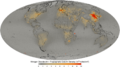 Nitrogen dioxide troposphere column from Aura OMI
 -
 Air quality monitoring in London
 -
 Nizhniy Tagil NTMK main entrance
 -
 NO2 exposure pathways by EPA


Medical Disclaimer: WikiMD is for informational purposes only and is not a substitute for professional medical advice. Content may be inaccurate or outdated and should not be used for diagnosis or treatment. Always consult your healthcare provider for medical decisions. Verify information with trusted sources such as CDC.gov and NIH.gov. By using this site, you agree that WikiMD is not liable for any outcomes related to its content. See full disclaimer.
Credits:Most images are courtesy of Wikimedia commons, and templates, categories Wikipedia, licensed under CC BY SA or similar.
Translate page: - East Asian
中文,
日本,
한국어,
South Asian
हिन्दी,
தமிழ்,
తెలుగు,
Urdu,
ಕನ್ನಡ,
Southeast Asian
Indonesian,
Vietnamese,
Thai,
မြန်မာဘာသာ,
বাংলা
European
español,
Deutsch,
français,
Greek,
português do Brasil,
polski,
română,
русский,
Nederlands,
norsk,
svenska,
suomi,
Italian
Middle Eastern & African
عربى,
Turkish,
Persian,
Hebrew,
Afrikaans,
isiZulu,
Kiswahili,
Other
Bulgarian,
Hungarian,
Czech,
Swedish,
മലയാളം,
मराठी,
ਪੰਜਾਬੀ,
ગુજરાતી,
Portuguese,
Ukrainian

