Enteric nervous system
The Enteric Nervous System (ENS) is a part of the autonomic nervous system that directly controls the gastrointestinal system. It is sometimes referred to as the "second brain" or the brain in the gut because it can operate independently of the brain and spinal cord, the central nervous system (CNS).
Structure[edit]
The ENS consists of some 500 million neurons, which is one hundredth of the number of neurons in the brain, and more than the number of neurons in the spinal cord. The neurons of the ENS are collected into two types of ganglia: myenteric (Auerbach's) and submucosal (Meissner's) plexuses.
Function[edit]
The ENS controls the motility, exocrine and endocrine secretions, and microcirculation of the gastrointestinal tract. It also plays a role in controlling the immune and inflammatory responses of the gut.
Clinical significance[edit]
Dysfunction of the ENS can lead to a range of disorders, including gastroesophageal reflux disease (GERD), gastroparesis, chronic constipation, and irritable bowel syndrome (IBS).
See also[edit]
- Autonomic nervous system
- Gastrointestinal tract
- Neuron
- Gastroesophageal reflux disease
- Gastroparesis
- Chronic constipation
- Irritable bowel syndrome
References[edit]
External links[edit]
- WikiMD: Enteric Nervous System

This WikiMD article can only be edited by registered and verified editors. You can log in or register.
-
Enteric nervous system diagram
-
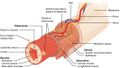 Layers of the gastrointestinal tract
 -
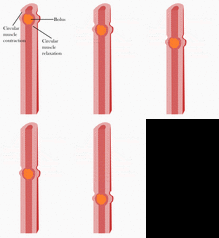 Animation of peristalsis
 -
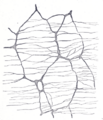 Enteric nervous system
 -
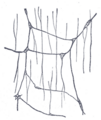 Enteric nervous system


Medical Disclaimer: WikiMD is for informational purposes only and is not a substitute for professional medical advice. Content may be inaccurate or outdated and should not be used for diagnosis or treatment. Always consult your healthcare provider for medical decisions. Verify information with trusted sources such as CDC.gov and NIH.gov. By using this site, you agree that WikiMD is not liable for any outcomes related to its content. See full disclaimer.
Credits:Most images are courtesy of Wikimedia commons, and templates, categories Wikipedia, licensed under CC BY SA or similar.
Translate page: - East Asian
中文,
日本,
한국어,
South Asian
हिन्दी,
தமிழ்,
తెలుగు,
Urdu,
ಕನ್ನಡ,
Southeast Asian
Indonesian,
Vietnamese,
Thai,
မြန်မာဘာသာ,
বাংলা
European
español,
Deutsch,
français,
Greek,
português do Brasil,
polski,
română,
русский,
Nederlands,
norsk,
svenska,
suomi,
Italian
Middle Eastern & African
عربى,
Turkish,
Persian,
Hebrew,
Afrikaans,
isiZulu,
Kiswahili,
Other
Bulgarian,
Hungarian,
Czech,
Swedish,
മലയാളം,
मराठी,
ਪੰਜਾਬੀ,
ગુજરાતી,
Portuguese,
Ukrainian


