Nanomaterials
Nanomaterials are materials with structural components smaller than 100 nanometers. They are of significant interest in various fields of science and technology due to their unique properties that are not found in their bulk counterparts.
Definition[edit]
Nanomaterials are defined as materials with at least one external dimension in the size range from approximately 1-100 nanometers. At this size, materials begin to exhibit unique properties that affect physical, chemical, and biological behavior.
Types of Nanomaterials[edit]
Nanomaterials can be classified into several types based on their structure and composition. These include Nanoparticles, Nanocomposites, Nanotubes, and Nanowires.
Nanoparticles[edit]
Nanoparticles are particles between 1 and 100 nanometers in size. They have a wide variety of applications in fields such as medicine, physics, and chemistry.
Nanocomposites[edit]
Nanocomposites are materials that incorporate nanoparticles into a bulk material. They often have improved mechanical and thermal properties compared to the bulk material.
Nanotubes[edit]
Nanotubes are cylindrical nanostructures with a very high aspect ratio. They are often made of carbon and have exceptional mechanical, electrical, and thermal properties.
Nanowires[edit]
Nanowires are wires with a diameter on the order of a few nanometers. They have potential applications in nanoscale electronics and optics.
Applications[edit]
Nanomaterials have a wide range of applications in various fields such as Medicine, Electronics, Energy production, and Environmental science.
Medicine[edit]
In medicine, nanomaterials are used in drug delivery systems, imaging, and diagnostics. They can be designed to interact with cells and tissues at a molecular level, allowing for targeted drug delivery and improved imaging capabilities.
Electronics[edit]
In electronics, nanomaterials are used in the production of transistors, sensors, and other electronic components. They can improve the performance and efficiency of these devices.
Energy Production[edit]
Nanomaterials are used in energy production, particularly in solar cells and fuel cells. They can improve the efficiency of these devices and reduce their cost.
Environmental Science[edit]
In environmental science, nanomaterials are used in pollution detection and remediation. They can be designed to detect specific pollutants and remove them from the environment.
See Also[edit]
References[edit]
<references />
 | This nanotechnology-related article is a stub. You can help WikiMD by expanding the page. |
-
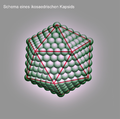 Nanomaterials
 -
 Lotus effect on a leaf
 -
 Gecko foot on glass
 -
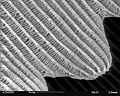 SEM image of a peacock wing
 -
 Peacock displaying feathers
 -
 Brazilian crystal opal
 -
 Claws of Lasiodora parahybana
 -
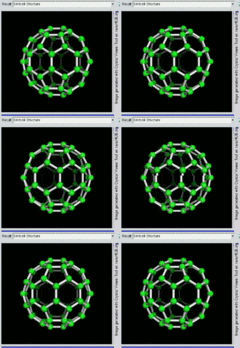 C60 Buckyball


Medical Disclaimer: WikiMD is for informational purposes only and is not a substitute for professional medical advice. Content may be inaccurate or outdated and should not be used for diagnosis or treatment. Always consult your healthcare provider for medical decisions. Verify information with trusted sources such as CDC.gov and NIH.gov. By using this site, you agree that WikiMD is not liable for any outcomes related to its content. See full disclaimer.
Credits:Most images are courtesy of Wikimedia commons, and templates, categories Wikipedia, licensed under CC BY SA or similar.
Translate this page: - East Asian
中文,
日本,
한국어,
South Asian
हिन्दी,
தமிழ்,
తెలుగు,
Urdu,
ಕನ್ನಡ,
Southeast Asian
Indonesian,
Vietnamese,
Thai,
မြန်မာဘာသာ,
বাংলা
European
español,
Deutsch,
français,
Greek,
português do Brasil,
polski,
română,
русский,
Nederlands,
norsk,
svenska,
suomi,
Italian
Middle Eastern & African
عربى,
Turkish,
Persian,
Hebrew,
Afrikaans,
isiZulu,
Kiswahili,
Other
Bulgarian,
Hungarian,
Czech,
Swedish,
മലയാളം,
मराठी,
ਪੰਜਾਬੀ,
ગુજરાતી,
Portuguese,
Ukrainian
