Myriapoda
Myriapoda is a subphylum of arthropods containing over 13,000 species, most of which are millipedes and centipedes. They are characterized by having many legs, although the exact number varies between species. Myriapods are found in almost all types of terrestrial habitats, and are most abundant in moist forests.
Characteristics[edit]
Myriapods are known for their multiple pairs of legs, with most species having anywhere from 30 to 400 individual legs. They have a single pair of antennae and simple eyes. The body is divided into a head, thorax, and abdomen. The head contains the mouthparts and sensory organs, while the thorax and abdomen contain the legs and reproductive organs, respectively.
Classification[edit]
The Myriapoda is divided into four classes: Chilopoda (centipedes), Diplopoda (millipedes), Pauropoda, and Symphyla. Each class has its own unique characteristics and number of species.
Chilopoda[edit]
The Chilopoda, or centipedes, are fast, carnivorous myriapods that have one pair of legs per body segment. They have a venomous bite which they use to kill their prey.
Diplopoda[edit]
The Diplopoda, or millipedes, are slower and feed on decaying plant matter. They have two pairs of legs per body segment and are known for their ability to produce noxious chemicals as a defense mechanism.
Pauropoda[edit]
The Pauropoda are small, soil-dwelling myriapods that feed on decaying plant matter. They have 9-11 pairs of legs and are less well-known than the other classes.
Symphyla[edit]
The Symphyla are also small, soil-dwelling myriapods, but they have 12 pairs of legs and are more closely related to the centipedes.
Ecology and behavior[edit]
Myriapods are found in almost all terrestrial habitats, but are most abundant in moist forests. They play important roles in the ecosystem by helping to break down decaying plant matter and serving as prey for a variety of animals.
See also[edit]

This WikiMD article can only be edited by registered and verified editors. You can log in or register.
Myriapoda[edit]
-
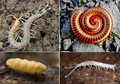 Myriapod collage
 -
 House Centipede Closeup
 -
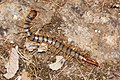 Scolopendra
 -
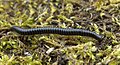 Tachypodoiulus niger
 -
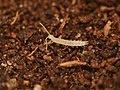 Scutigerella
 -
 Eurypauropodid
 -
 Arthropleura
 -
 Various myriapod phylogenies


_crop.jpg)


Medical Disclaimer: WikiMD is for informational purposes only and is not a substitute for professional medical advice. Content may be inaccurate or outdated and should not be used for diagnosis or treatment. Always consult your healthcare provider for medical decisions. Verify information with trusted sources such as CDC.gov and NIH.gov. By using this site, you agree that WikiMD is not liable for any outcomes related to its content. See full disclaimer.
Credits:Most images are courtesy of Wikimedia commons, and templates, categories Wikipedia, licensed under CC BY SA or similar.
Translate page: - East Asian
中文,
日本,
한국어,
South Asian
हिन्दी,
தமிழ்,
తెలుగు,
Urdu,
ಕನ್ನಡ,
Southeast Asian
Indonesian,
Vietnamese,
Thai,
မြန်မာဘာသာ,
বাংলা
European
español,
Deutsch,
français,
Greek,
português do Brasil,
polski,
română,
русский,
Nederlands,
norsk,
svenska,
suomi,
Italian
Middle Eastern & African
عربى,
Turkish,
Persian,
Hebrew,
Afrikaans,
isiZulu,
Kiswahili,
Other
Bulgarian,
Hungarian,
Czech,
Swedish,
മലയാളം,
मराठी,
ਪੰਜਾਬੀ,
ગુજરાતી,
Portuguese,
Ukrainian

