Mycoremediation
Mycoremediation is an environmentally friendly, innovative bioremediation technology that uses fungi to decontaminate polluted environments. This process leverages the natural ability of fungi to degrade complex organic compounds that are often found in pollutants. Mycoremediation has been applied in various contexts, including the cleanup of petroleum hydrocarbons, pesticides, heavy metals, and other toxic substances from soil and water.
Overview[edit]
Fungi are a diverse group of organisms that play a crucial role in ecosystems. They decompose organic matter, recycling nutrients back into the soil and atmosphere. In mycoremediation, specific fungi known as mycoremediators are selected for their ability to absorb, concentrate, or break down pollutants. The most commonly used fungi in mycoremediation are species of the genus Pleurotus (oyster mushrooms), which are known for their robust enzymatic systems capable of breaking down complex hydrocarbons and other pollutants.
Mechanism[edit]
The mechanism of mycoremediation involves the secretion of extracellular enzymes and acids by fungi, which break down pollutants into smaller, less harmful compounds. This process can occur through several pathways, including:
- Biodegradation: Fungi convert harmful pollutants into harmless substances through metabolic processes.
- Bioaccumulation: Fungi absorb and concentrate pollutants from the environment into their mycelial biomass.
- Biosorption: The cell walls of fungi bind and immobilize pollutants, reducing their mobility and bioavailability in the environment.
Applications[edit]
Mycoremediation has been successfully applied in various environmental cleanup projects, including:
- Soil Remediation: The treatment of contaminated soil with fungi to degrade or immobilize pollutants such as pesticides, heavy metals, and hydrocarbons.
- Water Treatment: The use of fungi to purify water contaminated with organic pollutants, heavy metals, and endocrine-disrupting compounds.
- E-waste Management: The application of fungi to recover precious metals from electronic waste through bioleaching processes.
Advantages[edit]
Mycoremediation offers several advantages over traditional remediation methods:
- Eco-friendly: It is a green technology that minimizes ecological disruption.
- Cost-effective: It is often less expensive than chemical or physical remediation methods.
- Versatile: It can be applied to a wide range of pollutants and environments.
- Sustainable: It uses renewable resources and can improve soil health and biodiversity.
Challenges[edit]
Despite its potential, mycoremediation faces several challenges:
- Specificity: The effectiveness of mycoremediation can be limited by the specificity of fungi to certain pollutants.
- Environmental Conditions: The success of mycoremediation is influenced by environmental factors such as temperature, pH, and moisture, which can affect fungal growth and activity.
- Scale-up: Scaling up laboratory successes to field applications can be challenging due to the complexity of environmental systems.
Future Directions[edit]
Research in mycoremediation is focused on enhancing the efficiency and applicability of this technology. This includes the genetic modification of fungi to improve their pollutant-degrading capabilities, the development of fungal consortia that can target a broader range of pollutants, and the integration of mycoremediation with other bioremediation technologies.
See Also[edit]
 | This medical article is a stub. You can help WikiMD by expanding the page. |
-
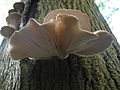 Pleurotus ostreatus
 -
 Acid Mine Drainage from a metallic sulfide mine
 -
 Shaggy Ink Cap
 -
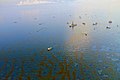 Deepwater Horizon Oil Spill Aerial Image
 -
 Pleurotus pulmonarius on tree


Medical Disclaimer: WikiMD is for informational purposes only and is not a substitute for professional medical advice. Content may be inaccurate or outdated and should not be used for diagnosis or treatment. Always consult your healthcare provider for medical decisions. Verify information with trusted sources such as CDC.gov and NIH.gov. By using this site, you agree that WikiMD is not liable for any outcomes related to its content. See full disclaimer.
Credits:Most images are courtesy of Wikimedia commons, and templates, categories Wikipedia, licensed under CC BY SA or similar.
Translate page: - East Asian
中文,
日本,
한국어,
South Asian
हिन्दी,
தமிழ்,
తెలుగు,
Urdu,
ಕನ್ನಡ,
Southeast Asian
Indonesian,
Vietnamese,
Thai,
မြန်မာဘာသာ,
বাংলা
European
español,
Deutsch,
français,
Greek,
português do Brasil,
polski,
română,
русский,
Nederlands,
norsk,
svenska,
suomi,
Italian
Middle Eastern & African
عربى,
Turkish,
Persian,
Hebrew,
Afrikaans,
isiZulu,
Kiswahili,
Other
Bulgarian,
Hungarian,
Czech,
Swedish,
മലയാളം,
मराठी,
ਪੰਜਾਬੀ,
ગુજરાતી,
Portuguese,
Ukrainian

