Mukhwas
Mukhwas is a traditional Indian after-meal snack or digestive aid. It is usually consumed after meals due to its sweet taste and breath-freshening properties. Mukhwas varies widely in composition, but the most common ingredients are fennel seeds, anise seeds, coconut, and sesame seeds.
Ingredients[edit]
Fennel seeds are a common ingredient in Mukhwas. They are known for their sweet, licorice-like flavor and are often coated in sugar or other sweeteners. Fennel seeds are also known for their digestive properties and are often used in traditional medicine to treat digestive disorders.
Anise seeds are another common ingredient in Mukhwas. They have a similar flavor to fennel seeds but are slightly more pungent. Anise seeds are also known for their digestive properties and are often used in traditional medicine to treat digestive disorders.
Coconut is often used in Mukhwas for its sweet, nutty flavor. It is usually used in shredded form and is often toasted to enhance its flavor.
Sesame seeds are also commonly used in Mukhwas. They have a mild, nutty flavor and are often toasted to enhance their flavor. Sesame seeds are also known for their high nutritional value, including high levels of protein and healthy fats.
Preparation[edit]
Mukhwas is typically prepared by mixing the ingredients together in a bowl. The mixture is then toasted in a pan until the seeds become fragrant. The toasted mixture is then allowed to cool before being stored in an airtight container.
Consumption[edit]
Mukhwas is typically consumed after meals as a digestive aid and breath freshener. It is often served in small bowls or dishes and is usually consumed by taking a small handful and chewing it thoroughly.
Cultural Significance[edit]
Mukhwas has a significant cultural importance in India. It is often served at the end of meals in Indian restaurants and is also commonly found at Indian weddings and other celebrations.


-
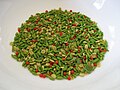 Green Mukhwas


Medical Disclaimer: WikiMD is for informational purposes only and is not a substitute for professional medical advice. Content may be inaccurate or outdated and should not be used for diagnosis or treatment. Always consult your healthcare provider for medical decisions. Verify information with trusted sources such as CDC.gov and NIH.gov. By using this site, you agree that WikiMD is not liable for any outcomes related to its content. See full disclaimer.
Credits:Most images are courtesy of Wikimedia commons, and templates, categories Wikipedia, licensed under CC BY SA or similar.
Translate page: - East Asian
中文,
日本,
한국어,
South Asian
हिन्दी,
தமிழ்,
తెలుగు,
Urdu,
ಕನ್ನಡ,
Southeast Asian
Indonesian,
Vietnamese,
Thai,
မြန်မာဘာသာ,
বাংলা
European
español,
Deutsch,
français,
Greek,
português do Brasil,
polski,
română,
русский,
Nederlands,
norsk,
svenska,
suomi,
Italian
Middle Eastern & African
عربى,
Turkish,
Persian,
Hebrew,
Afrikaans,
isiZulu,
Kiswahili,
Other
Bulgarian,
Hungarian,
Czech,
Swedish,
മലയാളം,
मराठी,
ਪੰਜਾਬੀ,
ગુજરાતી,
Portuguese,
Ukrainian

