Moving violation
Moving Violation
[[File:[[File:|frameless]]|frameless|alt=]]
| First Label | |
|---|---|
| Second Label | |
| Third Label |
{{This article related article is a stub.}}
A moving violation refers to a traffic offense committed by a driver while the vehicle is in motion. These violations are typically categorized as minor infractions, but they can also be serious offenses that pose a threat to public safety. Moving violations are subject to legal penalties, such as fines, points on a driver's license, and even license suspension or revocation.
Types of Moving Violations[edit]
There are various types of moving violations, each with its own specific definition and consequences. Some common examples include:
Speeding[edit]
Speeding is one of the most prevalent moving violations. It occurs when a driver exceeds the posted speed limit or drives at a speed that is unsafe for the current road conditions. Speeding can result in fines, points on a driver's license, increased insurance rates, and even license suspension in severe cases.
Reckless Driving[edit]
Reckless driving refers to operating a vehicle with a willful disregard for the safety of others. This includes actions such as excessive speeding, aggressive driving, tailgating, and running red lights. Reckless driving is a serious offense that can lead to significant fines, license suspension, and even criminal charges in some jurisdictions.
Running a Red Light or Stop Sign[edit]
Running a red light or stop sign is a common moving violation that endangers both the driver and other road users. It is essential to obey traffic signals to prevent accidents and maintain order on the roads. Penalties for running a red light or stop sign typically include fines and points on a driver's license.
Failure to Yield[edit]
Failure to yield occurs when a driver fails to give the right of way to another vehicle or pedestrian as required by traffic laws. This violation often leads to accidents and can result in fines, points on a driver's license, and increased insurance rates.
Improper Lane Change[edit]
An improper lane change happens when a driver changes lanes without signaling or without ensuring that it is safe to do so. This violation can lead to accidents and is subject to penalties such as fines and points on a driver's license.
Consequences of Moving Violations[edit]
The consequences of moving violations vary depending on the severity of the offense and the jurisdiction in which it occurs. Some common consequences include:
Fines[edit]
Fines are the most common penalty for moving violations. The amount of the fine typically depends on the specific violation and may vary from jurisdiction to jurisdiction.
Points on a Driver's License[edit]
Many jurisdictions use a point system to track and penalize moving violations. Each violation is assigned a certain number of points, and when a driver accumulates a certain number of points within a specified period, their license may be suspended or revoked.
Increased Insurance Rates[edit]
Moving violations can also result in increased insurance rates. Insurance companies consider drivers with a history of moving violations to be higher risk, and therefore, they charge higher premiums.
License Suspension or Revocation[edit]
In severe cases, repeated or serious moving violations can lead to license suspension or revocation. This means that the driver is temporarily or permanently prohibited from operating a motor vehicle.
Avoiding Moving Violations[edit]
To avoid moving violations, drivers should adhere to traffic laws and practice safe driving habits. Some tips to prevent moving violations include:
- Obeying speed limits and adjusting speed according to road conditions.
- Using turn signals when changing lanes or making turns.
- Coming to a complete stop at red lights and stop signs.
- Yielding the right of way to other vehicles and pedestrians.
- Avoiding distractions while driving, such as texting or talking on the phone.
- Maintaining a safe following distance from the vehicle ahead.
- Adhering to all traffic signs and signals.
Conclusion[edit]
Moving violations are serious offenses that can have significant consequences for drivers. It is crucial to understand and follow traffic laws to ensure the safety of oneself and others on the road. By practicing safe driving habits and being aware of the rules of the road, drivers can avoid moving violations and contribute to a safer driving environment.
-
 USMC-03597
 -
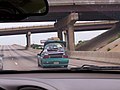 Duct-tape Moving Van from behind
 -
 Falschfahrer
 -
 Transporte ilegal em Johannesburg
 -
 Pictures taken by red light camera


.jpg)

Ad. Transform your health with W8MD Weight Loss, Sleep & MedSpa

Tired of being overweight?
Special offer:
Budget GLP-1 weight loss medications
- Semaglutide starting from $29.99/week and up with insurance for visit of $59.99 and up per week self pay.
- Tirzepatide starting from $45.00/week and up (dose dependent) or $69.99/week and up self pay
✔ Same-week appointments, evenings & weekends ✔ Tele visits available with certain limitations Learn more:
- GLP-1 weight loss clinic NYC
- W8MD's NYC medical weight loss
- W8MD Philadelphia GLP-1 shots
- Philadelphia GLP-1 injections
- Affordable GLP-1 shots NYC
- Budget GLP-1 shots
|
WikiMD Medical Encyclopedia |
Medical Disclaimer: WikiMD is for informational purposes only and is not a substitute for professional medical advice. Content may be inaccurate or outdated and should not be used for diagnosis or treatment. Always consult your healthcare provider for medical decisions. Verify information with trusted sources such as CDC.gov and NIH.gov. By using this site, you agree that WikiMD is not liable for any outcomes related to its content. See full disclaimer.
Credits:Most images are courtesy of Wikimedia commons, and templates, categories Wikipedia, licensed under CC BY SA or similar.
Translate this page: - East Asian
中文,
日本,
한국어,
South Asian
हिन्दी,
தமிழ்,
తెలుగు,
Urdu,
ಕನ್ನಡ,
Southeast Asian
Indonesian,
Vietnamese,
Thai,
မြန်မာဘာသာ,
বাংলা
European
español,
Deutsch,
français,
Greek,
português do Brasil,
polski,
română,
русский,
Nederlands,
norsk,
svenska,
suomi,
Italian
Middle Eastern & African
عربى,
Turkish,
Persian,
Hebrew,
Afrikaans,
isiZulu,
Kiswahili,
Other
Bulgarian,
Hungarian,
Czech,
Swedish,
മലയാളം,
मराठी,
ਪੰਜਾਬੀ,
ગુજરાતી,
Portuguese,
Ukrainian
