Montmorillonite
Montmorillonite is a naturally occurring mineral that belongs to the smectite group of clay minerals. It is named after Montmorillon, a town in France where it was first identified. Montmorillonite is a 2:1 clay, meaning it has two tetrahedral sheets sandwiching a central octahedral sheet. The particles are plate-shaped and extremely small with a high specific surface area and a high cation exchange capacity.
Structure and Composition[edit]
Montmorillonite is composed of a stack of layers, each layer being composed of an octahedral sheet sandwiched between two tetrahedral sheets. The central octahedral sheet is composed of aluminium or magnesium ions surrounded by oxygen or hydroxyl ions. The tetrahedral sheets are composed of silicon ions surrounded by oxygen ions. The layers are held together by weak van der Waals forces and can be easily intercalated by other ions and molecules.
Properties[edit]
Montmorillonite has several unique properties that make it useful in a variety of applications. It has a very high cation exchange capacity, meaning it can absorb positively charged ions from a solution. It also has a high specific surface area, which means it can absorb a large amount of water. This makes it useful in applications such as drilling mud and cat litter. Montmorillonite also has the ability to swell, which makes it useful in applications such as sealing and environmental remediation.
Applications[edit]
Montmorillonite is used in a variety of applications due to its unique properties. It is used as a soil conditioner, as a component of drilling mud, and as a desiccant to absorb moisture. It is also used in the production of cat litter, due to its ability to absorb odors and liquids. In the field of medicine, montmorillonite is used as an antidiarrheal agent, as it can absorb toxins and bacteria in the gut.
Health and Safety[edit]
While montmorillonite is generally considered safe for use in various applications, it can pose health risks if inhaled. Inhalation of montmorillonite dust can cause silicosis, a lung disease caused by inhalation of silica dust. Therefore, it is important to use proper safety precautions when handling montmorillonite.
 | This article about a specific mineral or mineraloid is a stub. You can help WikiMD by expanding the page. |
 | This medical article is a stub. You can help WikiMD by expanding the page. |
-
 Montmorillonite Quartz
 -
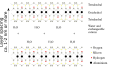 Montmorillonite Diagram


Medical Disclaimer: WikiMD is for informational purposes only and is not a substitute for professional medical advice. Content may be inaccurate or outdated and should not be used for diagnosis or treatment. Always consult your healthcare provider for medical decisions. Verify information with trusted sources such as CDC.gov and NIH.gov. By using this site, you agree that WikiMD is not liable for any outcomes related to its content. See full disclaimer.
Credits:Most images are courtesy of Wikimedia commons, and templates, categories Wikipedia, licensed under CC BY SA or similar.
Translate page: - East Asian
中文,
日本,
한국어,
South Asian
हिन्दी,
தமிழ்,
తెలుగు,
Urdu,
ಕನ್ನಡ,
Southeast Asian
Indonesian,
Vietnamese,
Thai,
မြန်မာဘာသာ,
বাংলা
European
español,
Deutsch,
français,
Greek,
português do Brasil,
polski,
română,
русский,
Nederlands,
norsk,
svenska,
suomi,
Italian
Middle Eastern & African
عربى,
Turkish,
Persian,
Hebrew,
Afrikaans,
isiZulu,
Kiswahili,
Other
Bulgarian,
Hungarian,
Czech,
Swedish,
മലയാളം,
मराठी,
ਪੰਜਾਬੀ,
ગુજરાતી,
Portuguese,
Ukrainian

