Military hospital
Military hospital is a hospital that is owned and operated by the military. Military hospitals are typically reserved for the use of military personnel and their dependents, but in some cases they may also offer services to civilians. They are often located on or near military bases, and can provide a range of medical services, from routine care to major surgeries.
History[edit]
The concept of a military hospital has been around for centuries, with the earliest known examples dating back to the Roman Empire. These early military hospitals were often temporary structures set up in the field to treat wounded soldiers. Over time, the concept evolved and by the 19th century, permanent military hospitals were being built in many countries.
Function[edit]
The primary function of a military hospital is to provide medical care to military personnel and their dependents. This can include everything from routine check-ups to emergency surgeries. In addition to providing medical care, military hospitals also often serve as training facilities for military medical personnel.
Types of Military Hospitals[edit]
There are several different types of military hospitals, including:
- Field Hospitals: These are temporary hospitals that are set up in the field during times of war or disaster. They are designed to be mobile and can be set up and taken down quickly.
- Base Hospitals: These are permanent hospitals that are located on military bases. They provide a wide range of medical services to military personnel and their dependents.
- Veterans Hospitals: These are hospitals that are specifically designed to provide care to veterans. They are often run by the Department of Veterans Affairs.
See Also[edit]
References[edit]

This WikiMD article can only be edited by registered and verified editors. You can log in or register.
-
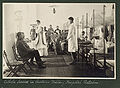 Austrian military hospital during World War I
 -
 Patients in a military hospital in Tampere, 1940
 -
 Military hospital 11 in Israel, 1948
 -
 Military hospital 11 in Israel, 1948
 -
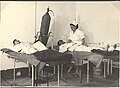 Military hospital 11 in Israel, 1948
 -
 Military hospital 11 in Israel, 1948


_Ziv.jpg)
_Ziv.jpg)
_Ziv.jpg)
_Ziv.jpg)
Advertise on WikiMD — 81,000+ full articles, ~900,000 total pages, ~250 million page views. Global reach, limited time promotional rates from $1/page/day. Learn more · View stats

Translate page: - East Asian
中文,
日本,
한국어,
South Asian
हिन्दी,
தமிழ்,
తెలుగు,
Urdu,
ಕನ್ನಡ,
Southeast Asian
Indonesian,
Vietnamese,
Thai,
မြန်မာဘာသာ,
বাংলা
European
español,
Deutsch,
français,
Greek,
português do Brasil,
polski,
română,
русский,
Nederlands,
norsk,
svenska,
suomi,
Italian
Middle Eastern & African
عربى,
Turkish,
Persian,
Hebrew,
Afrikaans,
isiZulu,
Kiswahili,
Other
Bulgarian,
Hungarian,
Czech,
Swedish,
മലയാളം,
मराठी,
ਪੰਜਾਬੀ,
ગુજરાતી,
Portuguese,
Ukrainian
About WikiMD • Contact • Disclaimer • Privacy • Copyright • Site statistics
Some content and images may originate from Wikimedia Commons or Wikipedia and remain subject to their stated licenses. Unless otherwise noted, eligible WikiMD content is available under CC BY-SA 4.0.
WikiMD Wellnesspedia — Free health & wellness information for patients, students, and health professionals.

