Metamorphosis
Metamorphosis is a biological process that involves a conspicuous and relatively abrupt change in the body structure through cell growth and differentiation. This process is most commonly observed in amphibians and insects, although other animal groups such as cnidarians, crustaceans, echinoderms, and tunicates also undergo metamorphosis.
Types of Metamorphosis[edit]
There are two main types of metamorphosis: complete and incomplete.
Complete Metamorphosis[edit]
Complete metamorphosis is characterized by four distinct stages: egg, larva, pupa, and adult. This type of metamorphosis is common in insects such as butterflies, beetles, flies, and bees.
Incomplete Metamorphosis[edit]
Incomplete metamorphosis involves three stages: egg, nymph, and adult. The nymph stage resembles a small adult and gradually develops into the adult form through a series of molts. This type of metamorphosis is common in insects such as grasshoppers, crickets, and cockroaches.
Role in Evolution[edit]
Metamorphosis plays a significant role in the evolution of species. It allows for greater specialization and adaptation to different environments, contributing to the survival and success of various species.
See Also[edit]
References[edit]

This WikiMD article can only be edited by registered and verified editors. You can log in or register.
-
 Dragonfly metamorphosis
 -
 Locust instars
 -
 Holometabolous vs. Hemimetabolous
 -
 Metamorphosis of butterfly
 -
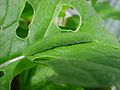 Pieris rapae caterpillar
 -
 Pieris rapae caterpillar 2
 -
 Pieris rapae cocoon
 -
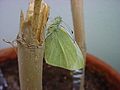 Pieris rapae young adult
 -
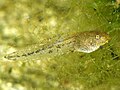 Rana temporaria larva
 -
 Rana temporaria - larva final stage
 -
 Larve Kamsalamander


.png)


Medical Disclaimer: WikiMD is for informational purposes only and is not a substitute for professional medical advice. Content may be inaccurate or outdated and should not be used for diagnosis or treatment. Always consult your healthcare provider for medical decisions. Verify information with trusted sources such as CDC.gov and NIH.gov. By using this site, you agree that WikiMD is not liable for any outcomes related to its content. See full disclaimer.
Credits:Most images are courtesy of Wikimedia commons, and templates, categories Wikipedia, licensed under CC BY SA or similar.
Translate page: - East Asian
中文,
日本,
한국어,
South Asian
हिन्दी,
தமிழ்,
తెలుగు,
Urdu,
ಕನ್ನಡ,
Southeast Asian
Indonesian,
Vietnamese,
Thai,
မြန်မာဘာသာ,
বাংলা
European
español,
Deutsch,
français,
Greek,
português do Brasil,
polski,
română,
русский,
Nederlands,
norsk,
svenska,
suomi,
Italian
Middle Eastern & African
عربى,
Turkish,
Persian,
Hebrew,
Afrikaans,
isiZulu,
Kiswahili,
Other
Bulgarian,
Hungarian,
Czech,
Swedish,
മലയാളം,
मराठी,
ਪੰਜਾਬੀ,
ગુજરાતી,
Portuguese,
Ukrainian

