Melastoma affine
Melastoma affine, commonly known as the Blue Tongue or Native Lasiandra, is a species of flowering plant in the family Melastomataceae. It is native to Australia, particularly found in the eastern regions, including Queensland and New South Wales.
Description[edit]
Melastoma affine is a shrub that typically grows to a height of 1 to 2 meters. The plant is characterized by its striking purple flowers, which bloom predominantly in the warmer months. The flowers have five petals and numerous stamens, which are a distinctive feature of the Melastomataceae family.
The leaves of Melastoma affine are opposite, simple, and ovate with a prominent venation pattern. The plant is known for its fruit, a berry that turns black when ripe. The fruit is edible and has a sweet taste, but it is most famous for staining the mouth and tongue blue, hence the common name "Blue Tongue."
Habitat[edit]
Melastoma affine thrives in a variety of habitats, including rainforests, woodlands, and coastal regions. It prefers well-drained soils and can often be found in areas with high rainfall. The plant is adaptable and can grow in both full sun and partial shade.
Ecological Role[edit]
This species plays a significant role in its ecosystem. The flowers of Melastoma affine attract a variety of pollinators, including bees and butterflies, which are essential for the plant's reproduction. The fruit is consumed by birds and other wildlife, aiding in seed dispersal.
Uses[edit]
While primarily known for its ornamental value, Melastoma affine has been used in traditional medicine by Indigenous Australians. The leaves and roots have been used to treat various ailments, although scientific studies on its medicinal properties are limited.
Conservation Status[edit]
Melastoma affine is not currently listed as threatened or endangered. However, like many native plants, it faces challenges from habitat destruction and competition with invasive species.
Cultivation[edit]
Melastoma affine is cultivated for its attractive flowers and is used in gardens and landscaping. It is relatively easy to grow, requiring minimal maintenance once established. The plant can be propagated from seeds or cuttings.
References[edit]
- Smith, J. (2005). Flora of Australia. Australian Government Publishing Service.
- Jones, D. L. (2002). Native Plants of Queensland. Reed New Holland.
See Also[edit]
-
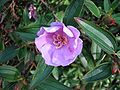 Melastoma affine
 -
 Melastoma affine flower & bud


Medical Disclaimer: WikiMD is for informational purposes only and is not a substitute for professional medical advice. Content may be inaccurate or outdated and should not be used for diagnosis or treatment. Always consult your healthcare provider for medical decisions. Verify information with trusted sources such as CDC.gov and NIH.gov. By using this site, you agree that WikiMD is not liable for any outcomes related to its content. See full disclaimer.
Credits:Most images are courtesy of Wikimedia commons, and templates, categories Wikipedia, licensed under CC BY SA or similar.
Translate page: - East Asian
中文,
日本,
한국어,
South Asian
हिन्दी,
தமிழ்,
తెలుగు,
Urdu,
ಕನ್ನಡ,
Southeast Asian
Indonesian,
Vietnamese,
Thai,
မြန်မာဘာသာ,
বাংলা
European
español,
Deutsch,
français,
Greek,
português do Brasil,
polski,
română,
русский,
Nederlands,
norsk,
svenska,
suomi,
Italian
Middle Eastern & African
عربى,
Turkish,
Persian,
Hebrew,
Afrikaans,
isiZulu,
Kiswahili,
Other
Bulgarian,
Hungarian,
Czech,
Swedish,
മലയാളം,
मराठी,
ਪੰਜਾਬੀ,
ગુજરાતી,
Portuguese,
Ukrainian

