Masculinizing hormone therapy
Masculinizing hormone therapy is a form of hormone therapy in which sex hormones and other hormonal medications are administered to transgender and gender diverse individuals for the purpose of aligning their secondary sexual characteristics more closely with their gender identity. This form of hormone therapy is typically given to individuals assigned female at birth who identify as male or on the masculine spectrum.
Overview[edit]
Masculinizing hormone therapy primarily involves the administration of testosterone, a hormone that is responsible for the development of male secondary sexual characteristics. The therapy may be administered in several forms, including injections, patches, gels, and tablets. The specific form and dosage of testosterone used may vary depending on the individual's health, age, and personal preference.
Effects[edit]
The effects of masculinizing hormone therapy can be both physical and psychological. Physical changes may include increased muscle mass, redistribution of body fat, deepening of the voice, growth of facial and body hair, cessation of menstruation, and enlargement of the clitoris. Psychological changes may include increased libido, changes in emotional well-being, and changes in social identity and interactions.
Risks and considerations[edit]
Like all forms of hormone therapy, masculinizing hormone therapy carries potential risks and side effects. These may include acne, mood changes, weight gain, increased red blood cell count, and potential cardiovascular risks. Long-term effects of the therapy are not fully known, and ongoing medical monitoring is recommended.
See also[edit]
- Feminizing hormone therapy
- Transgender health care
- Gender dysphoria
- Hormone replacement therapy (transgender)
 | This article about lesbian, gay, bisexual or transgender topics is a stub. You can help WikiMD by expanding the page. |
 | This medical article is a stub. You can help WikiMD by expanding the page. |
Masculinizing hormone therapy[edit]
-
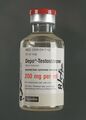 Depo-testosterone 200 mg/ml


Medical Disclaimer: WikiMD is for informational purposes only and is not a substitute for professional medical advice. Content may be inaccurate or outdated and should not be used for diagnosis or treatment. Always consult your healthcare provider for medical decisions. Verify information with trusted sources such as CDC.gov and NIH.gov. By using this site, you agree that WikiMD is not liable for any outcomes related to its content. See full disclaimer.
Credits:Most images are courtesy of Wikimedia commons, and templates, categories Wikipedia, licensed under CC BY SA or similar.
Translate page: - East Asian
中文,
日本,
한국어,
South Asian
हिन्दी,
தமிழ்,
తెలుగు,
Urdu,
ಕನ್ನಡ,
Southeast Asian
Indonesian,
Vietnamese,
Thai,
မြန်မာဘာသာ,
বাংলা
European
español,
Deutsch,
français,
Greek,
português do Brasil,
polski,
română,
русский,
Nederlands,
norsk,
svenska,
suomi,
Italian
Middle Eastern & African
عربى,
Turkish,
Persian,
Hebrew,
Afrikaans,
isiZulu,
Kiswahili,
Other
Bulgarian,
Hungarian,
Czech,
Swedish,
മലയാളം,
मराठी,
ਪੰਜਾਬੀ,
ગુજરાતી,
Portuguese,
Ukrainian

