Management of multiple sclerosis
Management of multiple sclerosis involves an integrated approach that includes disease-modifying therapies (DMT), symptom management, and lifestyle modifications.
Disease-Modifying Therapies (DMT)[edit]
Disease-modifying therapies (DMT) are a group of medications used to slow the progression of multiple sclerosis. They work by reducing the frequency and severity of relapses, and by delaying the progression of disability. DMTs include injectable medications, oral medications, and infused medications.
Symptom Management[edit]
Symptom management in multiple sclerosis involves the use of medications, physical therapy, and other treatments to manage symptoms such as fatigue, difficulty walking, numbness or tingling, muscle spasms, pain, depression, and problems with memory and concentration.
Lifestyle Modifications[edit]
Lifestyle modifications can help manage symptoms and improve quality of life for people with multiple sclerosis. These may include regular exercise, a healthy diet, adequate sleep, stress management, and avoiding triggers that can worsen symptoms.
Prognosis[edit]
The prognosis for multiple sclerosis varies widely, depending on the type of MS, the individual's health status, and the effectiveness of their treatment plan.
See Also[edit]
 | This medical article is a stub. You can help WikiMD by expanding the page. |
-
 Methylprednisolone
 -
 Injection
 -
 Implant
 -
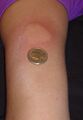 Copaxone Injection Site Reaction
 -
 Mitoxantrone
 -
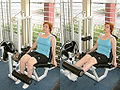 Leg Extension Machine Exercise
 -
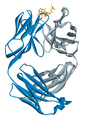 Alemtuzumab Fab


Medical Disclaimer: WikiMD is for informational purposes only and is not a substitute for professional medical advice. Content may be inaccurate or outdated and should not be used for diagnosis or treatment. Always consult your healthcare provider for medical decisions. Verify information with trusted sources such as CDC.gov and NIH.gov. By using this site, you agree that WikiMD is not liable for any outcomes related to its content. See full disclaimer.
Credits:Most images are courtesy of Wikimedia commons, and templates, categories Wikipedia, licensed under CC BY SA or similar.
Translate page: - East Asian
中文,
日本,
한국어,
South Asian
हिन्दी,
தமிழ்,
తెలుగు,
Urdu,
ಕನ್ನಡ,
Southeast Asian
Indonesian,
Vietnamese,
Thai,
မြန်မာဘာသာ,
বাংলা
European
español,
Deutsch,
français,
Greek,
português do Brasil,
polski,
română,
русский,
Nederlands,
norsk,
svenska,
suomi,
Italian
Middle Eastern & African
عربى,
Turkish,
Persian,
Hebrew,
Afrikaans,
isiZulu,
Kiswahili,
Other
Bulgarian,
Hungarian,
Czech,
Swedish,
മലയാളം,
मराठी,
ਪੰਜਾਬੀ,
ગુજરાતી,
Portuguese,
Ukrainian

