Linea terminalis
The Linea Terminalis is a term used in anatomy to describe a curved ridge on the internal surface of the pelvis. It is also known as the terminal line, and it marks the boundary between the true and false pelvis.
Etymology[edit]
The term "Linea Terminalis" is derived from Latin, where "Linea" means line and "Terminalis" means terminal or end. Thus, it can be translated as the "end line" or "terminal line".
Anatomy[edit]
The Linea Terminalis is a curved ridge that separates the pelvis into two parts: the true pelvis and the false pelvis. The true pelvis is the lower part, which is bounded by the pelvic inlet and the pelvic outlet. The false pelvis is the upper part, which is above the Linea Terminalis and is part of the abdominal cavity.
The Linea Terminalis is formed by the pectineal line of the pubis, the arcuate line of the ilium, and the sacral promontory. These three structures form a continuous line that runs from the pubic bone to the sacrum.
Clinical Significance[edit]
The Linea Terminalis plays a crucial role in obstetrics. It is used to determine the shape and size of the pelvic inlet, which can affect childbirth. A narrow or irregularly shaped pelvic inlet can cause complications during childbirth, such as obstructed labor.
Related Terms[edit]
- Pelvis
- Pectineal line
- Arcuate line
- Sacral promontory
- Pelvic inlet
- Pelvic outlet
- Obstetrics
- Childbirth
See Also[edit]

This WikiMD article can only be edited by registered and verified editors. You can log in or register.
-
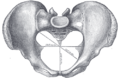 Gray's Anatomy Plate 238
 -
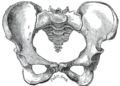 Gray's Anatomy Plate 242


Advertise on WikiMD — 81,000+ full articles, ~900,000 total pages, ~250 million page views. Global reach, limited time promotional rates from $1/page/day. Learn more · View stats


Translate page: - East Asian
中文,
日本,
한국어,
South Asian
हिन्दी,
தமிழ்,
తెలుగు,
Urdu,
ಕನ್ನಡ,
Southeast Asian
Indonesian,
Vietnamese,
Thai,
မြန်မာဘာသာ,
বাংলা
European
español,
Deutsch,
français,
Greek,
português do Brasil,
polski,
română,
русский,
Nederlands,
norsk,
svenska,
suomi,
Italian
Middle Eastern & African
عربى,
Turkish,
Persian,
Hebrew,
Afrikaans,
isiZulu,
Kiswahili,
Other
Bulgarian,
Hungarian,
Czech,
Swedish,
മലയാളം,
मराठी,
ਪੰਜਾਬੀ,
ગુજરાતી,
Portuguese,
Ukrainian
About WikiMD • Contact • Disclaimer • Privacy • Copyright • Site statistics
Some content and images may originate from Wikimedia Commons or Wikipedia and remain subject to their stated licenses. Unless otherwise noted, eligible WikiMD content is available under CC BY-SA 4.0.
WikiMD Wellnesspedia — Free health & wellness information for patients, students, and health professionals.

