Linea nigra
Linea Nigra is a dark vertical line that appears on the abdomen during about three quarters of all pregnancies. The brownish streak is usually about a centimeter in width. The line runs vertically along the midline of the abdomen from the pubis to the umbilicus, but can also run from the pubis to the top of the abdomen. Linea nigra is due to increased melanocyte-stimulating hormone made by the placenta.
Causes[edit]
The exact cause of linea nigra is unknown, but it is believed to be related to the hormonal changes that occur during pregnancy. These changes can stimulate the body's production of melanin, the pigment that gives color to the skin, hair, and eyes. This increased melanin production can darken the skin along the midline of the abdomen, leading to the appearance of linea nigra.
Symptoms[edit]
Linea nigra typically appears around the second trimester of pregnancy. It is a dark, thin line that runs from the belly button to the pubic area. In some women, it may also extend from the belly button to the top of the abdomen. The line is usually about a centimeter in width, but can vary in size. It is more noticeable in women with darker skin.
Treatment[edit]
Linea nigra is a normal part of pregnancy and does not require any treatment. It usually fades away on its own within a few months after delivery. However, if a woman is concerned about the appearance of linea nigra, she can talk to her doctor about ways to minimize its appearance.
Prevention[edit]
There is no known way to prevent linea nigra. However, avoiding sun exposure can prevent the line from becoming darker. Wearing sunscreen and protective clothing can help protect the skin from the sun's harmful rays.
See Also[edit]

This WikiMD article can only be edited by registered and verified editors. You can log in or register.
Linea nigra[edit]
-
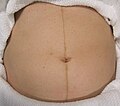 Linea nigra on a pregnant belly
 -
 Breastfeeding 6 day old twins
 -
 Cesarean section scar and linea nigra
 -
 Linea nigra line


Medical Disclaimer: WikiMD is for informational purposes only and is not a substitute for professional medical advice. Content may be inaccurate or outdated and should not be used for diagnosis or treatment. Always consult your healthcare provider for medical decisions. Verify information with trusted sources such as CDC.gov and NIH.gov. By using this site, you agree that WikiMD is not liable for any outcomes related to its content. See full disclaimer.
Credits:Most images are courtesy of Wikimedia commons, and templates, categories Wikipedia, licensed under CC BY SA or similar.
Translate page: - East Asian
中文,
日本,
한국어,
South Asian
हिन्दी,
தமிழ்,
తెలుగు,
Urdu,
ಕನ್ನಡ,
Southeast Asian
Indonesian,
Vietnamese,
Thai,
မြန်မာဘာသာ,
বাংলা
European
español,
Deutsch,
français,
Greek,
português do Brasil,
polski,
română,
русский,
Nederlands,
norsk,
svenska,
suomi,
Italian
Middle Eastern & African
عربى,
Turkish,
Persian,
Hebrew,
Afrikaans,
isiZulu,
Kiswahili,
Other
Bulgarian,
Hungarian,
Czech,
Swedish,
മലയാളം,
मराठी,
ਪੰਜਾਬੀ,
ગુજરાતી,
Portuguese,
Ukrainian

