Lifeguard
A lifeguard is a rescuer who supervises the safety and rescue of swimmers, surfers, and other water sports participants such as in a swimming pool, water park, beach, spa, river and lake. Lifeguards are strong swimmers and trained in CPR/AED first aid, certified in water rescue using a variety of aids and equipment depending on requirements of their particular venue. In some areas, lifeguards are part of the emergency services system to incidents and in some communities, the lifeguard service also carries out mountain rescues, or may function as the primary EMS provider.
Duties and responsibilities[edit]
A lifeguard is responsible for the safety of people in an area of water, and usually a defined area immediately surrounding or adjacent to it, such as a beach next to an ocean or lake. The priority is to ensure no harm comes to users of the area for which they are responsible. Lifeguards often take on this responsibility upon employment, although they can also be volunteers.
Training[edit]
The training of lifeguards varies greatly, depending on the specific requirements of the role. In general, it includes training in surveillance skills to help recognize and prevent injuries, rescue skills in the water and on land, first aid and CPR training, and in some cases, management and administration of leisure and aquatic facilities.
Equipment[edit]
Lifeguards have a variety of equipment depending on the environment they are working in and the specific duties they are expected to perform. This can include items such as rescue tubes, rescue cans, spinal boards, first aid kits, oxygen therapy equipment, AEDs, whistles, binoculars, communication devices, and more.
See also[edit]
References[edit]

This WikiMD article can only be edited by registered and verified editors. You can log in or register.
-
 Lifeguard
 -
 Lifeguard
 -
 Lifeguard
 -
 Lifeguard
 -
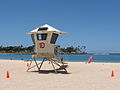 Lifeguard
 -
 Lifeguard
 -
 Lifeguard
 -
 Lifeguard
 -
 Lifeguard
 -
 Lifeguard
 -
 Lifeguard
 -
 Lifeguard


.jpg)


Medical Disclaimer: WikiMD is for informational purposes only and is not a substitute for professional medical advice. Content may be inaccurate or outdated and should not be used for diagnosis or treatment. Always consult your healthcare provider for medical decisions. Verify information with trusted sources such as CDC.gov and NIH.gov. By using this site, you agree that WikiMD is not liable for any outcomes related to its content. See full disclaimer.
Credits:Most images are courtesy of Wikimedia commons, and templates, categories Wikipedia, licensed under CC BY SA or similar.
Translate page: - East Asian
中文,
日本,
한국어,
South Asian
हिन्दी,
தமிழ்,
తెలుగు,
Urdu,
ಕನ್ನಡ,
Southeast Asian
Indonesian,
Vietnamese,
Thai,
မြန်မာဘာသာ,
বাংলা
European
español,
Deutsch,
français,
Greek,
português do Brasil,
polski,
română,
русский,
Nederlands,
norsk,
svenska,
suomi,
Italian
Middle Eastern & African
عربى,
Turkish,
Persian,
Hebrew,
Afrikaans,
isiZulu,
Kiswahili,
Other
Bulgarian,
Hungarian,
Czech,
Swedish,
മലയാളം,
मराठी,
ਪੰਜਾਬੀ,
ગુજરાતી,
Portuguese,
Ukrainian

