Li hing mui
| Alternative names | |
| Type | Dried fruit |
| Course | |
| Place of origin | China |
| Region or state | |
| Associated national cuisine | |
| Created by | |
| Invented | |
| Cooking time | minutes to minutes |
| Serving temperature | |
| Main ingredients | Plum |
| Ingredients generally used | |
| Variations | |
| Food energy | kcal |
| Nutritional value | Protein: g, Fat: g, Carbohydrate: g |
| Glycemic index | |
| Similar dishes | |
| Other information | |
| Website | [ Official website] |
Li Hing Mui is a popular dried fruit snack originating from China. It is made from plums that have been preserved and flavored with a mixture of salt, sugar, and licorice. Li Hing Mui is known for its unique sweet, sour, and salty taste, making it a favorite among many people.
History[edit]
The origins of Li Hing Mui can be traced back to ancient China. It was traditionally used as a medicinal herb due to its various health benefits. Over time, it gained popularity as a snack and became a staple in Chinese cuisine.
Preparation[edit]
To make Li Hing Mui, plums are first dried and then coated with a mixture of salt, sugar, and licorice. The plums are left to marinate in this mixture for several days, allowing the flavors to infuse into the fruit. Once the plums are fully dried and flavored, they are ready to be enjoyed as a snack.
Consumption[edit]
Li Hing Mui is typically consumed as a standalone snack. It can be eaten straight out of the package or used as an ingredient in various dishes and desserts. Some popular ways to enjoy Li Hing Mui include adding it to ice cream, sprinkling it on top of shaved ice, or using it as a garnish for cocktails.
Health Benefits[edit]
Li Hing Mui is not only delicious but also offers several health benefits. It is a good source of dietary fiber, which aids in digestion and helps maintain a healthy digestive system. Additionally, Li Hing Mui contains antioxidants that help protect the body against free radicals and reduce the risk of chronic diseases.
Cultural Significance[edit]
Li Hing Mui holds cultural significance in Chinese communities around the world. It is often associated with celebrations and festivals, where it is shared among family and friends. In Hawaii, Li Hing Mui is particularly popular and is commonly used as a flavoring for various snacks and drinks.
See Also[edit]
References[edit]
-
 Chinese preserved plum snack
 -
 Taiwanese Li hing powder
 -
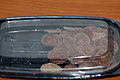 Japanese Mei
 -
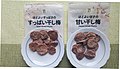 Dried Japanese plums, sour (left) and sweet (right)


_and_sweet_(right).jpg)

Medical Disclaimer: WikiMD is for informational purposes only and is not a substitute for professional medical advice. Content may be inaccurate or outdated and should not be used for diagnosis or treatment. Always consult your healthcare provider for medical decisions. Verify information with trusted sources such as CDC.gov and NIH.gov. By using this site, you agree that WikiMD is not liable for any outcomes related to its content. See full disclaimer.
Credits:Most images are courtesy of Wikimedia commons, and templates, categories Wikipedia, licensed under CC BY SA or similar.
Translate page: - East Asian
中文,
日本,
한국어,
South Asian
हिन्दी,
தமிழ்,
తెలుగు,
Urdu,
ಕನ್ನಡ,
Southeast Asian
Indonesian,
Vietnamese,
Thai,
မြန်မာဘာသာ,
বাংলা
European
español,
Deutsch,
français,
Greek,
português do Brasil,
polski,
română,
русский,
Nederlands,
norsk,
svenska,
suomi,
Italian
Middle Eastern & African
عربى,
Turkish,
Persian,
Hebrew,
Afrikaans,
isiZulu,
Kiswahili,
Other
Bulgarian,
Hungarian,
Czech,
Swedish,
മലയാളം,
मराठी,
ਪੰਜਾਬੀ,
ગુજરાતી,
Portuguese,
Ukrainian

