Lewy body
Lewy body is a type of protein deposit found in the brain of patients with certain neurodegenerative disorders, including Parkinson's disease and Dementia with Lewy bodies. These deposits are named after the neurologist Friedrich Heinrich Lewy, who first described them.
Overview[edit]
Lewy bodies are abnormal aggregates of protein that develop inside nerve cells, contributing to Parkinson's disease, Dementia with Lewy bodies, and some other disorders. They are identified by their particular shape and protein content.
Causes[edit]
The exact cause of Lewy body formation is unknown. However, they are thought to be associated with the degeneration of nerve cells, which is a characteristic of Parkinson's disease and Dementia with Lewy bodies.
Symptoms[edit]
The presence of Lewy bodies in the brain can lead to a range of symptoms, including:
Diagnosis[edit]
Diagnosis of Lewy body disease can be challenging, as its symptoms often overlap with those of other conditions, such as Parkinson's disease and Alzheimer's disease. However, certain clinical features, such as visual hallucinations and fluctuations in cognitive function, can suggest the presence of Lewy bodies.
Treatment[edit]
There is currently no cure for diseases associated with Lewy bodies. However, treatments can help manage symptoms. These may include medications for motor symptoms, cognitive symptoms, and psychiatric symptoms.
See also[edit]

This WikiMD article can only be edited by registered and verified editors. You can log in or register.
-
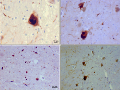 Lewy bodies (alpha synuclein inclusions)
 -
Lewy Koerperchen
-
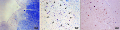 Dorsal motor nucleus of Vagus with Lewy body pathology (alpha synucleinopathy)
 -
Lewy neurites alpha synuclein
.svg)
.svg)

Medical Disclaimer: WikiMD is for informational purposes only and is not a substitute for professional medical advice. Content may be inaccurate or outdated and should not be used for diagnosis or treatment. Always consult your healthcare provider for medical decisions. Verify information with trusted sources such as CDC.gov and NIH.gov. By using this site, you agree that WikiMD is not liable for any outcomes related to its content. See full disclaimer.
Credits:Most images are courtesy of Wikimedia commons, and templates, categories Wikipedia, licensed under CC BY SA or similar.
Translate page: - East Asian
中文,
日本,
한국어,
South Asian
हिन्दी,
தமிழ்,
తెలుగు,
Urdu,
ಕನ್ನಡ,
Southeast Asian
Indonesian,
Vietnamese,
Thai,
မြန်မာဘာသာ,
বাংলা
European
español,
Deutsch,
français,
Greek,
português do Brasil,
polski,
română,
русский,
Nederlands,
norsk,
svenska,
suomi,
Italian
Middle Eastern & African
عربى,
Turkish,
Persian,
Hebrew,
Afrikaans,
isiZulu,
Kiswahili,
Other
Bulgarian,
Hungarian,
Czech,
Swedish,
മലയാളം,
मराठी,
ਪੰਜਾਬੀ,
ગુજરાતી,
Portuguese,
Ukrainian


