Leukoaraiosis
Leukoaraiosis is a condition often associated with aging and is characterized by the appearance of white matter changes in the brain. These changes are visible on brain imaging techniques such as MRI and CT scans. The term "leukoaraiosis" is derived from the Greek words "leuko" meaning white, and "araiosis" meaning rarefaction.
Causes[edit]
The exact cause of leukoaraiosis is not known. However, it is believed to be related to ischemia or lack of blood flow to the small blood vessels of the brain. Other factors that may contribute to the development of leukoaraiosis include hypertension, diabetes, and smoking.
Symptoms[edit]
Leukoaraiosis is often asymptomatic, meaning it does not cause any symptoms. However, in some cases, it may lead to cognitive decline, dementia, stroke, and gait disturbances.
Diagnosis[edit]
Leukoaraiosis is typically diagnosed through brain imaging techniques such as MRI or CT scans. These scans can reveal the characteristic white matter changes associated with the condition.
Treatment[edit]
There is currently no specific treatment for leukoaraiosis. Management of the condition primarily involves controlling risk factors such as hypertension, diabetes, and smoking. In some cases, medications may be used to manage symptoms.
Prognosis[edit]
The prognosis for individuals with leukoaraiosis varies. Some individuals may remain asymptomatic, while others may experience cognitive decline, dementia, stroke, or gait disturbances.
See also[edit]
- Magnetic Resonance Imaging
- Computed Tomography
- Ischemia
- Hypertension
- Diabetes
- Smoking
- Dementia
- Stroke
- Gait disturbances

This WikiMD article can only be edited by registered and verified editors. You can log in or register.
-
 Leukoaraiosis
 -
 Leukoaraiosis
 -
 Periventricular white matter lesions (annotated)
 -
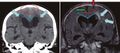 Normal pressure hydrocephalus versus atrophy


.jpg)


Medical Disclaimer: WikiMD is for informational purposes only and is not a substitute for professional medical advice. Content may be inaccurate or outdated and should not be used for diagnosis or treatment. Always consult your healthcare provider for medical decisions. Verify information with trusted sources such as CDC.gov and NIH.gov. By using this site, you agree that WikiMD is not liable for any outcomes related to its content. See full disclaimer.
Credits:Most images are courtesy of Wikimedia commons, and templates, categories Wikipedia, licensed under CC BY SA or similar.
Translate page: - East Asian
中文,
日本,
한국어,
South Asian
हिन्दी,
தமிழ்,
తెలుగు,
Urdu,
ಕನ್ನಡ,
Southeast Asian
Indonesian,
Vietnamese,
Thai,
မြန်မာဘာသာ,
বাংলা
European
español,
Deutsch,
français,
Greek,
português do Brasil,
polski,
română,
русский,
Nederlands,
norsk,
svenska,
suomi,
Italian
Middle Eastern & African
عربى,
Turkish,
Persian,
Hebrew,
Afrikaans,
isiZulu,
Kiswahili,
Other
Bulgarian,
Hungarian,
Czech,
Swedish,
മലയാളം,
मराठी,
ਪੰਜਾਬੀ,
ગુજરાતી,
Portuguese,
Ukrainian

