Leucoanthocyanidin
Leucoanthocyanidin is a type of flavonoid, a class of phytochemicals known for their potential health benefits. They are found in a variety of plants, including fruits, vegetables, and certain types of grains. Leucoanthocyanidins are colorless compounds that contribute to the formation of other flavonoids, such as anthocyanidins, which are responsible for the vibrant colors seen in many fruits and flowers.
Chemical Structure[edit]
Leucoanthocyanidins are composed of two phenyl groups and a heterocyclic ring. This structure is similar to that of other flavonoids, but leucoanthocyanidins are distinguished by the absence of a double bond in the heterocyclic ring and the lack of an oxygen atom at the 4 position.
Biosynthesis[edit]
The biosynthesis of leucoanthocyanidins occurs through the phenylpropanoid pathway, a metabolic pathway that produces a wide range of secondary metabolites in plants. The key enzyme in this process is leucoanthocyanidin reductase (LAR), which catalyzes the reduction of leucoanthocyanidins to catechins, another type of flavonoid.
Health Benefits[edit]
While research is still ongoing, some studies suggest that leucoanthocyanidins may have various health benefits. These include antioxidant, anti-inflammatory, and anti-cancer properties. They may also play a role in the prevention of cardiovascular diseases.
Food Sources[edit]
Leucoanthocyanidins are found in a variety of foods, including certain fruits like apples and grapes, vegetables such as kale and spinach, and grains like sorghum and barley. They are also present in beverages like tea and wine.
See Also[edit]
This flavonoid-related article is a stub. You can help WikiMD by expanding it.
-
 Flavan-3,4-diol
 -
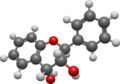 Leucoanthocyanidin 3D BS


Medical Disclaimer: WikiMD is for informational purposes only and is not a substitute for professional medical advice. Content may be inaccurate or outdated and should not be used for diagnosis or treatment. Always consult your healthcare provider for medical decisions. Verify information with trusted sources such as CDC.gov and NIH.gov. By using this site, you agree that WikiMD is not liable for any outcomes related to its content. See full disclaimer.
Credits:Most images are courtesy of Wikimedia commons, and templates, categories Wikipedia, licensed under CC BY SA or similar.
Translate page: - East Asian
中文,
日本,
한국어,
South Asian
हिन्दी,
தமிழ்,
తెలుగు,
Urdu,
ಕನ್ನಡ,
Southeast Asian
Indonesian,
Vietnamese,
Thai,
မြန်မာဘာသာ,
বাংলা
European
español,
Deutsch,
français,
Greek,
português do Brasil,
polski,
română,
русский,
Nederlands,
norsk,
svenska,
suomi,
Italian
Middle Eastern & African
عربى,
Turkish,
Persian,
Hebrew,
Afrikaans,
isiZulu,
Kiswahili,
Other
Bulgarian,
Hungarian,
Czech,
Swedish,
മലയാളം,
मराठी,
ਪੰਜਾਬੀ,
ગુજરાતી,
Portuguese,
Ukrainian

