Leucyl aminopeptidase
Leucyl aminopeptidase (LAP), also known as aminopeptidase L or leucine aminopeptidase, is an enzyme that plays a crucial role in protein metabolism. It belongs to the family of aminopeptidases, which are enzymes that catalyze the removal of amino acids from the N-terminus of peptides and proteins. Leucyl aminopeptidase specifically cleaves leucine, but it can also act on other amino acids with large hydrophobic side chains.
Function[edit]
Leucyl aminopeptidase is involved in the process of protein degradation, where it aids in the recycling of amino acids for the synthesis of new proteins. This enzyme is essential for maintaining the balance of amino acids within the cell and plays a role in various cellular processes, including cell growth, differentiation, and response to stress. LAP is found in a wide range of organisms, from bacteria to humans, indicating its fundamental importance in biology.
Structure[edit]
The enzyme is typically a homohexamer, meaning it is composed of six identical subunits. Each subunit contains a zinc ion, which is crucial for the enzyme's catalytic activity. The structure of leucyl aminopeptidase allows it to bind substrates efficiently and catalyze the hydrolysis of peptide bonds adjacent to leucine residues.
Clinical Significance[edit]
Elevated levels of leucyl aminopeptidase have been observed in certain pathological conditions, such as liver diseases and some types of cancer. Therefore, measuring the activity of this enzyme in blood or tissue samples can serve as a biomarker for diagnosing and monitoring these conditions. Additionally, inhibitors of leucyl aminopeptidase are being explored as potential therapeutic agents for diseases where the regulation of protein degradation is disrupted.
Research[edit]
Research on leucyl aminopeptidase has provided insights into the mechanisms of protein degradation and the regulation of amino acid levels in cells. Studies on the enzyme's structure and function have also contributed to the development of inhibitors that could be used in the treatment of diseases related to protein metabolism disorders.
 | This enzyme-related article is a stub. You can help WikiMD by expanding the page. |
-
 Proposed LAP-A active site
 -
 Hypothesized Mechanisms of Bovine lens LAP and PepA
 -
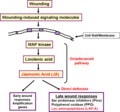 The Octadecanoid Pathway as studied in tomato


Medical Disclaimer: WikiMD is for informational purposes only and is not a substitute for professional medical advice. Content may be inaccurate or outdated and should not be used for diagnosis or treatment. Always consult your healthcare provider for medical decisions. Verify information with trusted sources such as CDC.gov and NIH.gov. By using this site, you agree that WikiMD is not liable for any outcomes related to its content. See full disclaimer.
Credits:Most images are courtesy of Wikimedia commons, and templates, categories Wikipedia, licensed under CC BY SA or similar.
Translate page: - East Asian
中文,
日本,
한국어,
South Asian
हिन्दी,
தமிழ்,
తెలుగు,
Urdu,
ಕನ್ನಡ,
Southeast Asian
Indonesian,
Vietnamese,
Thai,
မြန်မာဘာသာ,
বাংলা
European
español,
Deutsch,
français,
Greek,
português do Brasil,
polski,
română,
русский,
Nederlands,
norsk,
svenska,
suomi,
Italian
Middle Eastern & African
عربى,
Turkish,
Persian,
Hebrew,
Afrikaans,
isiZulu,
Kiswahili,
Other
Bulgarian,
Hungarian,
Czech,
Swedish,
മലയാളം,
मराठी,
ਪੰਜਾਬੀ,
ગુજરાતી,
Portuguese,
Ukrainian

